Choosing reliable suppliers in 2026 requires more than comparing catalog prices. An Animal Driven Vehicle Axle must match the vehicle’s load, wheel spacing, terrain, and working speed. A poorly matched axle can create uneven traction, premature wear, or unsafe handling. That matters on farms, rural roads, and uneven market paths.
This guide examines leading suppliers through practical and technical criteria. These include material quality, machining accuracy, bearing protection, brake compatibility, customization, delivery support, and documented testing. Supplier experience also matters. Manufacturers familiar with animal-drawn carts often understand real conditions better than general axle producers. Mud, dust, sudden loads, and long storage periods can expose small design weaknesses.
Look closely.
Reliable suppliers should explain axle capacity clearly. They should identify steel grades, surface treatments, maintenance intervals, and replacement-part availability. Factory inspection records, product samples, and customer references can strengthen confidence. However, published specifications do not always reflect field performance. A polished website proves little by itself.
The comparison also considers communication and after-sales service. A responsive engineering team can prevent costly sizing mistakes before production begins. Regional support may simplify repairs and reduce downtime. Still, no supplier is perfect. Some companies offer strong customization but limited inventory. Others deliver quickly but provide fewer technical documents. Buyers should verify each claim independently and request drawings before ordering.
The suppliers discussed here represent practical options, not automatic recommendations. Final selection should follow measured vehicle requirements, local operating conditions, and qualified professional review. Safety remains more important than a low initial price.
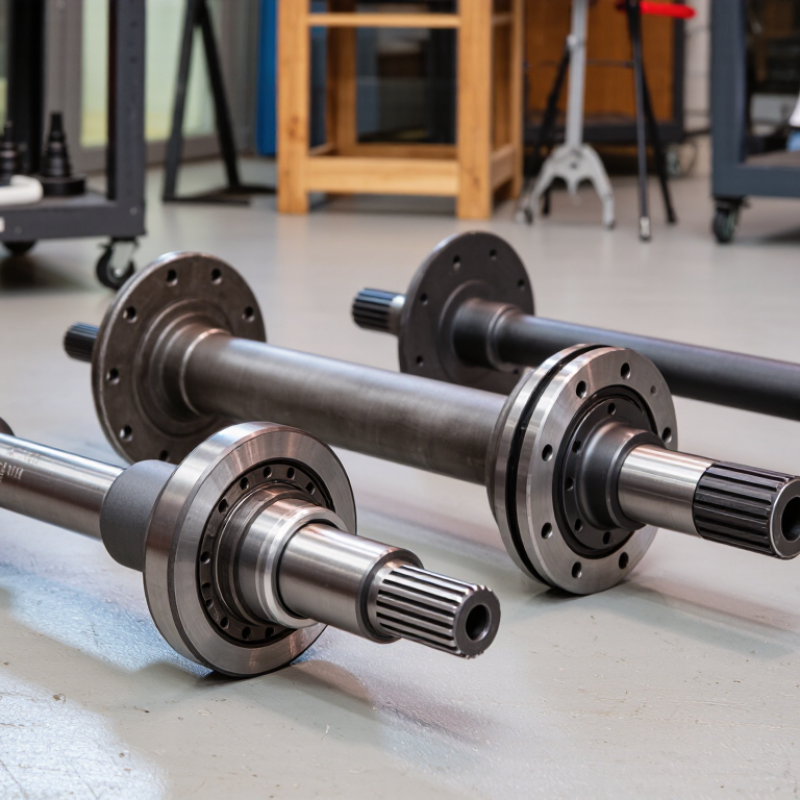
2026 Top Animal-Driven Vehicle Axle Suppliers?
What Is an Animal-Driven Vehicle Axle?
An animal-driven vehicle axle is the load-bearing shaft beneath a cart, wagon, or field sled. It connects the wheels and carries cargo, body weight, and uneven road shocks. Unlike a powered vehicle axle, it usually works at low speed without engine torque. However, its working conditions can be severe. A loaded cart may cross stones, mud, sharp slopes, and narrow farm paths.
The axle normally includes a steel shaft, wheel hubs, bearings, collars, and protective fasteners. Its diameter depends on payload, wheel spacing, terrain, and animal pulling force. FAOSTAT’s 2023 livestock data places global cattle numbers above 1.5 billion, showing the continuing scale of animal-based rural transport. The OECD-FAO Agricultural Outlook 2024–2033 also highlights sustained livestock activity in developing agricultural regions. These figures do not measure axle demand directly. They provide useful operating context.
Field inspection matters more than a catalogue promise. Check shaft straightness, weld quality, hub fit, and bearing clearance. A practical axle should resist bending while remaining repairable with local tools. Excessive weight can reduce animal efficiency. Too little strength can cause sudden failure. That balance is easy to underestimate. I would not treat a single laboratory load rating as final evidence. Rural roads are inconsistent, and real loads are often poorly recorded. Supplier comparisons should therefore include fatigue testing, spare-part access, corrosion protection, and documented load limits. A neat calculation can still fail in the mud.
A practical, brand-neutral comparison of supplier categories, axle designs, materials, specifications, and purchasing criteria.
| Supplier Category | Typical Axle Products | Common Technical Characteristics | Typical Applications | Key Information to Request |
|---|---|---|---|---|
| Specialist agricultural and animal-vehicle axle manufacturers | Complete non-powered axle assemblies, hubs, wheel ends, and mounting hardware |
Dead axle
Fixed or steerable
Custom track width Usually designed around vehicle load, wheel size, ground clearance, and braking requirements. |
Farm carts, animal-drawn wagons, forage carts, and rural transport vehicles | Rated static and dynamic loads, drawings, wheel compatibility, corrosion protection, test records, and replacement-part availability |
| Trailer and utility axle manufacturers | Solid axles, stub-axle assemblies, beam axles, hubs, and complete running gear |
Non-driven
Leaf-spring compatible
Hub-and-bearing options Often available in standardized dimensions with configurable spring seats and wheel-end components. |
Light-duty carts, utility wagons, maintenance vehicles, and small trailers pulled by animals | Axle load rating, hub pattern, bearing specification, spring-seat location, brake compatibility, and service limits |
| Custom metal fabrication suppliers | Fabricated steel axle beams, brackets, shafts, steering arms, and bespoke assemblies |
Low-volume production
Custom geometry
Welded construction Suitable when the vehicle has unusual dimensions or requires a heritage-style design. |
Prototype vehicles, heritage restorations, specialized carts, and small production runs | Material certificates, welding procedures, dimensional tolerances, non-destructive inspection, surface treatment, and load-test results |
| Traditional carriage and wagon component suppliers | Carriage axles, wheel hubs, wooden or steel wheel fittings, and repair components |
Heritage designs
Simple wheel ends
Repairable construction Components may prioritize authenticity, maintainability, and compatibility with traditional wheels. |
Horse-drawn carriages, parade vehicles, historical wagons, and recreational vehicles | Wheel type, axle-end dimensions, allowable load, lubrication method, corrosion protection, and repair instructions |
| Industrial bearing and wheel-end suppliers | Bearings, hubs, seals, spindle components, grease fittings, and wheel-end service kits |
Replaceable parts
Sealed or serviceable bearings
Standardized interfaces These suppliers usually provide components rather than a complete animal-driven vehicle axle. |
Axle maintenance, refurbishment, fleet servicing, and spare-parts programs | Bearing dimensions, static and dynamic load ratings, speed limitations, seal type, grease requirements, and operating-temperature range |
| Vehicle engineering and design-integrator suppliers | Engineered axle systems, steering layouts, braking integration, and vehicle-specific prototypes |
Design validation
System integration
Prototype support Focuses on matching axle geometry with animal draft loads, turning behavior, frame strength, and operator safety. |
Commercial animal-drawn vehicles, municipal carts, new product development, and fleet conversions | Design calculations, finite-element analysis where appropriate, prototype test plans, risk assessment, service documentation, and certification support |
| Technical Dimension | Factual Description | Why It Matters When Selecting a Supplier |
|---|---|---|
| Definition | An animal-driven vehicle axle is a structural wheel-supporting member that connects the vehicle frame to the wheels. In most applications, it is non-powered and does not transmit engine torque. | The supplier must design the axle for vertical loads, side loads, braking forces, impact loads, and loads generated during turning. |
| Axle function | The axle supports part or all of the vehicle weight, maintains wheel alignment, transfers forces to the chassis, and may provide mounting points for hubs, bearings, springs, steering arms, or brakes. | A complete quotation should identify whether it covers only the beam or the entire axle assembly, including hubs, bearings, brakes, and mounting hardware. |
| Powered versus non-powered design | Animal-drawn vehicles generally use dead axles or non-driven axles. The wheels rotate on hubs or bearings, while traction comes from the animal rather than an engine-driven differential. | A non-powered axle is usually simpler than a motor-vehicle drive axle, but it still requires correct load calculations and wheel-end design. |
| Common axle layouts | Typical layouts include a rigid beam axle, independent stub axles, a steerable front axle, or a fixed rear axle. The correct layout depends on vehicle length, turning radius, terrain, and payload. | Suppliers should provide the turning geometry, track width, axle centerline height, and mounting dimensions before production approval. |
| Common materials | Modern axle beams and spindles are commonly manufactured from structural or engineering steels. Traditional vehicles may also use hardwood components or steel-reinforced wheel assemblies. | Material grade, heat treatment, weld quality, and corrosion protection influence fatigue life and maintenance requirements. |
| Wheel-end components | Wheel ends may include hubs, tapered roller bearings, deep-groove ball bearings, plain bushings, seals, washers, nuts, and grease fittings. | Compatibility must be checked using bearing dimensions, shaft or spindle diameter, hub mounting pattern, wheel offset, and lubrication requirements. |
| Load requirements | Axle sizing should consider the unloaded axle weight, payload, occupants, uneven load distribution, dynamic impact, side loading, and braking forces. A simple static axle-load estimate is not sufficient for rough terrain or high-speed operation. | Request separate static, working, and maximum permissible load ratings, together with the assumptions used in the calculations. |
| Steering and turning | A front axle may use a pivoting beam, steering knuckles, a turntable arrangement, or another articulated steering method. Excessive scrub during turning increases tire, wheel, and axle loads. | The supplier should confirm steering angle, minimum turning radius, wheel-clearance requirements, and mechanical stops. |
| Braking integration | Depending on vehicle mass, speed, terrain, and local requirements, braking may be absent on very light vehicles or integrated through mechanical, hydraulic, or other wheel-braking systems. | Brake compatibility, stopping performance, parking restraint, and animal-handler control should be reviewed as part of the complete vehicle system. |
| Environmental protection | Animal-driven vehicles commonly operate in mud, dust, rain, manure, and unpaved conditions. Exposed steel components therefore require suitable coatings, paint systems, plating, stainless materials, or routine lubrication. | Ask for the proposed corrosion-protection process, sealing method, cleaning instructions, and recommended inspection intervals. |
| Supplier qualification | A reliable supplier should be able to provide dimensional drawings, material traceability, load calculations, quality-control records, inspection procedures, and after-sales replacement support. | These documents help compare suppliers objectively without relying only on price or product photographs. |
| 2026 purchasing checklist | Confirm axle type, rated loads, track width, ground clearance, wheel and tire dimensions, bearing arrangement, brake provisions, finish, delivery scope, warranty, spare parts, and applicable local safety requirements. | A complete technical specification reduces fitment problems and makes quotations from different supplier categories easier to compare. |
Ask for tested ratings under uneven, low-speed loads. A feed cart differs from a passenger cart. Request data for slopes, sudden starts, and long downhill loads.
Heat-treated steel can improve durability when controls remain consistent. Request steel grades, dimensional drawings, batch records, and corrosion test results. Numbers matter more than promises.
Test the axle on gravel, slopes, wet ground, and deep ruts. Inspect wheel alignment afterward. Small bends may appear early. Do not ignore them.
Check hubs, bearings, seals, fastening surfaces, and weld areas. Inspect bearing play before intensive work. Grease exposed joints regularly. Maintenance intervals should be clearly explained.
Both directly affect daily safety and animal comfort. The axle must match the vehicle’s brake interface and wheel spacing. Road vibration can disturb harness balance. That detail is easy to overlook.
Look for fatigue-test results, inspection records, traceable batches, and customer references. A certificate alone proves little without current test evidence. Ask for measured data. Marketing is not enough.
Confirm production capacity, spare-part availability, packaging quality, and realistic lead times. Ask how defects and design changes are handled. Replacement hubs and bearings can prevent long downtime. Parts access matters greatly.
A smaller supplier may understand local carts and simple repairs better. A larger factory may provide stronger testing and controlled production. Neither option is automatically best. Balance evidence, repair access, communication, and delivery reliability.
Modular axles, replaceable hubs, and basic load sensors may reduce downtime. Digital warnings could identify heat or overload. However, remote parts and poor repair access remain serious weaknesses. Simple designs may still win.
This article explains what an Animal Driven Vehicle Axle is and how it transfers power from an animal-drawn system to the wheels while supporting loads and maintaining stable movement. It examines the axle’s main components, including shafts, hubs, bearings, and protective structures, as well as the importance of proper alignment, load distribution, and durable materials. The discussion also introduces key criteria for evaluating suppliers in 2026, such as manufacturing quality, customization capability, testing standards, delivery reliability, technical support, and after-sales service.
The article then presents a neutral overview of leading supplier types without focusing on specific brands, helping buyers compare options according to vehicle design, operating conditions, and budget. It also covers common applications in agricultural carts, transport wagons, and utility vehicles, along with practical maintenance recommendations such as regular lubrication, inspections, tightening, and corrosion prevention. Finally, it considers future market trends, including lighter materials, improved safety, modular designs, and more sustainable manufacturing processes.