Global B2B Sourcing & Engineering Guide: Heavy-Duty Trailer Wheel Rims Manufacturing & OEM Supply

An exhaustive technical resource for procurement officers, fleet engineers, and agricultural machinery importers. Explore structural steel selection, dynamic load tolerance standards, fatigue resilience, and custom OEM manufacturing methodologies at ARS Industries.

ISO 9001:2015 Compliant Manufacturing Material Grade: High-Tensile S355J2+N / Q345B Steel OEM Export Markets: India, Nepal, Sri Lanka & Global Load Ratings: 1.5 Tons to 12 Tons per Rim Assembly

1. Structural Engineering & Metallurgy of Commercial Trailer Wheel Rims

In modern freight logistics and heavy agricultural haulage, Trailer Wheel Rims constitute a critical safety and operational component. Unlike powered steer or drive wheels, trailer rims endure sustained multi-axial dynamic stresses, torsional loads during sharp cornering, and vertical shock loads over unpaved rural or industrial terrain. Selecting the appropriate structural specification for heavy-duty trailer wheel rims dictates tire longevity, fuel efficiency, hub bearing health, and overall vehicle uptime.

At ARS Industries (established in 2014 in Shamli, Uttar Pradesh, India), our metallurgical approach prioritizes high-yield-strength micro-alloyed hot-rolled steel plates (such as S355J2+N, SAPH440, and Q345B grade steel). The mechanical integrity of a steel trailer rim depends primarily on two distinct structural units: the outer rim contour profile and the inner mounting disc.

Rim Contour Geometry & Flange Engineering

The rim profile must maintain zero circumferential deflection under maximum rated pneumatic pressure and dynamic payload shifts. Standard industrial and agricultural trailer wheel rims utilize 5° or 15° drop-center contours conforming to European Tyre and Rim Technical Organisation (ETRTO) and Tire and Rim Association (TRA) standards.

  • Drop-Center Profile: Engineered to facilitate rapid bead seat fitment while retaining pneumatic air seals under high side-force friction.
  • Flange Roll Profile: Deep-formed cold-rolled rim flanges designed to prevent tire bead slippage or rim lip deformation under heavy lateral sway.
  • Center Disc Stamping: Formed using multi-stage deep-drawing hydraulic presses to induce compressive residual stress, neutralizing cyclic operational bending moments.
Rim Profile Size Recommended Application PCD & Bolt Hole Configuration Center Bore (CB) Range Max Dynamic Load Rating Material Standard
6.00x16 Drop Center ADV Carts & Light Agricultural Trailers 5 Bolt / 139.7mm PCD or 6 Bolt / 205mm PCD 100mm – 160mm 1,800 kg per rim IS 2062 / S235JR Steel
7.00x20 Heavy Duty Tractor Trolleys & Heavy Farm Machinery 6 Bolt / 205mm PCD or 8 Bolt / 275mm PCD 160mm – 221mm 4,500 kg per rim S355J2+N / High Tensile Steel
8.25x22.5 Commercial Commercial Freight & Highway Tandem Trailers 10 Bolt / 335mm PCD (ISO Standard) 281mm Standard Hub 3,750 kg (Dual) / 4,250 kg (Single) Q345B High-Yield Alloy
9.00x20 Multi-Piece Industrial Heavy Equipment & Off-Road Trailers 8 Bolt / 275mm or 10 Bolt / 335mm PCD 221mm – 281mm 6,000 kg per rim Lock Ring Type Forged/Pressed Steel

Engineering Insight: Dynamic Fatigue & Stress Concentration Factor

Dynamic cornering fatigue tests demonstrate that 78% of structural failures in low-grade trailer wheel rims initiate around the stud bolt hole chamfers due to improper torque retention and micro-fretting corrosion. ARS Industries incorporates precision CNC-machined countersunk bolt holes with normalized grain orientation to eliminate stress risers and maintain clamp load integrity across 50,000+ operational kilometers.

2. High-Performance Product Recommendation Catalog

As an established B2B OEM supplier and global exporter, ARS Industries manufactures a specialized array of heavy-duty steel rims designed for commercial transport, agricultural equipment, and industrial material handling.
Engineered Trailer & Industrial Wheel Rims Catalog

Precision manufactured steel rims tested for extreme load tolerance and long service life

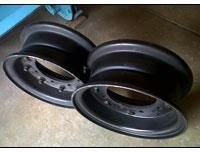
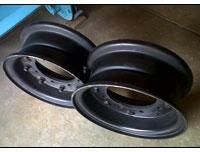
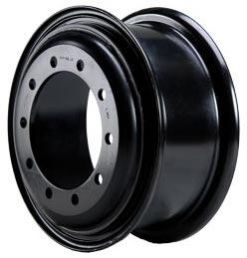
Commercial Heavy-Duty Steel Trailer Wheel Rim — ARS Industries

Heavy-Duty Commercial Trailer Wheel Rims

Designed for high-mileage highway commercial trailers and tandem-axle transport units. Built from rolled S355 structural steel with reinforced mounting discs for maximum payload efficiency.

  • Diameter Range: 16 inch to 22.5 inch
  • Coating: Cathodic E-Coated + Powder Topcoat
  • Compliance: ISO / SAE J267 Standard
  • Fitment: Commercial Trailers & Trolleys
Get a Quote
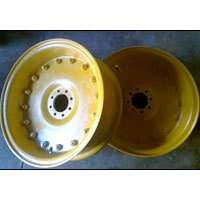
Multi-Piece Lock Ring Type Trailer Rim — ARS Industries

Multi-Piece Lock Ring Type Trailer Rims

Engineered for extreme off-road industrial and heavy machinery trailers. Features 2-piece or 3-piece lock ring retention to safely accommodate high-ply industrial pneumatic tires.

  • Structure: 2-Piece / 3-Piece Lock Ring
  • Rim Width: 6.00 to 10.00 inches
  • Target Use: Heavy Mining & Port Trailers
  • Safety Rating: High Dynamic Impact Resistance
Get a Quote
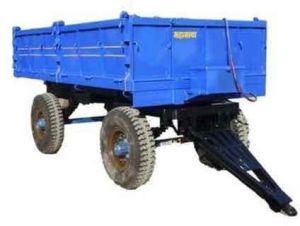
Tractor Trolley & Farm Agricultural Trailer Rim — ARS Industries

Heavy-Duty Agricultural Trailer & Trolley Rims

Optimized for agricultural tractor trolleys and farm implements operating in severe field conditions. High deflection resilience prevents fatigue cracking under heavy mud drag.

  • PCD Pattern: Standard 6-Hole & 8-Hole Agro
  • Load Rating: Up to 5.5 Tons per Wheel
  • Terrain Capability: Mud, Gravel & Deep Soil
  • Assembly: Fully Integrated Axle Fitment
Get a Quote
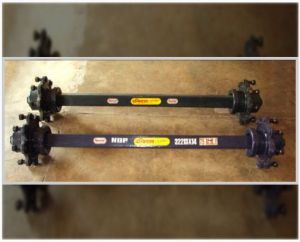
Integrated ADV Axle & Trailer Rim Assembly — ARS Industries

Integrated Axle & Trailer Wheel Rim Assembly

Pre-engineered complete stub axle and wheel rim match set. Eliminates clearance mismatch issues and ensures perfect bearing alignment for rural transport vehicles and carts.

  • Axle Type: Solid Round / Square Bar ADV
  • Hub Assembly: Heavy-Duty Tapered Roller Bearings
  • Supply Scope: Rim + Axle + Hub Set
  • Primary Export: Nepal, Sri Lanka, South Asia
Get a Quote
Forklift Heavy Duty Wheel Rim Assembly — ARS Industries

Forklift & Material Handling Heavy-Duty Rims

Precision split rims and lock-ring rims engineered specifically for material handling forklifts and yard trailers requiring continuous high-tonnage stability.

  • Size Range: 8.00-5 to 12.00-20
  • Structure: Split Type & Multi-Piece
  • Tire Compatibility: Solid & Pneumatic Tires
  • Manufacturing Standard: Precision Die Blanking
Get a Quote
Custom OEM Spec Trailer Rims — ARS Industries

Custom OEM Trailer Wheel Rims (Tailored Specs)

Custom-manufactured steel rims tailored to specific client drawings. Custom PCD patterns, offsets, center bores, and surface finish options for international trailer OEMs.

  • Engineering: Full CAD/CAM Customization
  • MOQ: Flexible Batch & Bulk Container Runs
  • Surface: Hot-Dip Galv / Custom Powder Coat
  • Quality Audit: 100% In-House Runout Testing
Get a Quote

3. Global Procurement Trends & Technological Innovations (2025–2030 Horizon)

The commercial trailer manufacturing landscape is undergoing a massive shift driven by global carbon offset mandates, fleet electrification, autonomous logistics, and strict total cost of ownership (TCO) benchmarks. Procurement managers sourcing Trailer Wheel Rims must evaluate technical criteria beyond immediate unit purchase costs to align with emerging technology vectors.

A. Light-Weighting via Advanced Ultra-High Strength Steel (UHSS)

With electric commercial trailers and hybrid heavy haulage gaining ground, reducing unsprung mass is paramount. Replacing conventional structural carbon steel with Advanced Ultra-High Strength Steels (UHSS) enables a 12% to 18% reduction in rim disc weight without sacrificing radial load capacity or fatigue life. Thinner, high-yield press-formed discs decrease rolling resistance, extending fleet payload headroom.

B. Advanced Cathodic Electrodeposition (E-Coating) Corrosion Barriers

Environmental exposure to de-icing salt solutions, maritime humidity, and aggressive agricultural chemicals (such as liquid nitrogen fertilizers) significantly accelerates rim flange corrosion. Modern global buyers now specify mandatory dual-stage surface treatments:

  1. Zinc Phosphate Immersion Pre-Treatment: Establishes a micro-crystalline passivation layer to prevent sub-film rust propagation.
  2. Cathodic Electro-Dip Coating (KTL/E-Coat): Provides uniform 20-30 micron primer coverage inside deep rim contours and bolt holes.
  3. Thermosetting Powder Coat Topcoat: Ensures UV resistance and high salt-spray endurance exceeding 1,000 hours under ASTM B117 testing standards.

C. Smart Rim Integration for TPMS & Telematics

Fleet automation relies heavily on real-time sensor feedback. Modern trailer wheel rim designs feature recessed valve-pocket geometries and internal sensor mounting pads that shield Tire Pressure Monitoring System (TPMS) units and hub temperature telemetry sensors from external debris and wheel-lock friction damage.

D. Automated Robotic Circumferential Submerged Arc Welding

Transitioning from manual gas metal arc welding (GMAW) to fully automated multi-pass submerged arc welding (SAW) guarantees 100% weld penetration between the center mounting disc and the outer rim profile. Automated robotic welding eliminates heat-affected zone (HAZ) embrittlement, ensuring balanced stress distribution across dynamic cyclic revolutions.

Need Custom OEM Engineering Specs for Your Trailer Rims?

Connect directly with ARS Industries' manufacturing engineers for CAD review and rapid quoting.

Get a Quote

4. Manufacturing Methodology & Quality Control Protocols at ARS Industries

As an established manufacturer headquartered in Shamli, Uttar Pradesh, ARS Industries operates a modern facility equipped with high-tonnage hydraulic forming presses, precision CNC spinning machines, and automated welding lines.

Our continuous quality assurance protocol governs every manufacturing phase to ensure complete traceability and adherence to ISO quality benchmarks:

  • Spectro Chemical Testing: Verification of raw steel coil metallurgy prior to blanking to confirm chemical composition and tensile strength.
  • Precision Blanking & Cold Profiling: Computer-controlled roll-forming ensures uniform rim contour thickness and exact bead seat dimensions.
  • Flash Butt & Submerged Arc Welding: High-frequency flash butt seam welding of rim strips followed by robotic circumferential disc-to-rim joint welding.
  • Radial & Lateral Runout Testing: 100% dial indicator verification to ensure total radial and lateral runout stays within ≤0.8mm tolerances.
  • Dynamic Fatigue & Cornering Stress Verification: Batch sampling subjected to high-cycle dynamic cornering fatigue testing matching SAE J267 performance criteria.

Enterprise Advantages of Partnering with ARS Industries

Over a decade of manufacturing excellence supplying OEMs and global distributors

ISO-Compliant Facility

Strict quality control processes operating under ISO-compliant frameworks from raw material intake to final export packaging.

Custom OEM Capabilities

In-house engineering team capable of customizing PCD bolt circles, offsets, hub bores, and rim gauge thicknesses to buyer CAD blueprints.

High Capacity & Scalability

Large-scale production lines designed to support bulk order fulfillment for trailer assembly plants and major spare parts importers.

Proven Export Logistics

Streamlined export clearance and container loading documentation serving buyers in Nepal, Sri Lanka, and worldwide trade hubs.

Global Procurement FAQ: Trailer Wheel Rims

In-depth technical answers to complex B2B buyer queries and sourcing guidelines

1. How do I calculate the correct radial load rating requirement for custom trailer wheel rims?

To calculate the minimum required radial load rating per trailer wheel rim, determine the Maximum Allowable Gross Vehicle Weight Rating (GVWR) of the trailer, subtract the hitch tongue weight transferred to the towing vehicle, and divide the remaining trailer axle load by the total number of wheel rims across all axles.

Formula: Required Rim Load Rating = [(GVWR - Tongue Weight) / Total Number of Trailer Wheels] × Safety Factor (1.15 to 1.25).

Always apply a safety margin of at least 15% to 25% to account for dynamic impact loads experienced when driving over highway potholes, unpaved agricultural terrain, or uneven payload distributions.

2. What are the key mechanical trade-offs between dual-wheel and single-wide trailer rim configurations?

Dual-wheel configurations utilize two narrow rims mounted back-to-back on a single hub, providing redundant load support and tire blowout stability. However, dual configurations increase total unsprung weight and tire replacement costs while creating potential stone-trapping hazards between wheel sidewalls.

Single-wide (super single) trailer rims offer significant weight savings (up to 100 kg per axle), lower rolling resistance, and simplified air pressure monitoring. However, single wide rims exert higher localized bending moments on hub bearings and require heavy-duty offset disc engineering to maintain correct scrub radius balance.

3. What international testing standards govern steel trailer wheel rim compliance?

High-quality commercial steel trailer wheel rims must comply with recognized international mechanical testing standards:

  • ISO 3006: Road vehicles — Passenger car wheels — Test methods (Dynamic cornering & radial fatigue tests).
  • SAE J267: Wheels/Rims — Commercial Vehicles — Performance Requirements and Test Procedures.
  • EUWA (European Wheel Manufacturers' Association): Standards for rim contour profiles, bead seat tolerances, and radial runout limitations.

At ARS Industries, batch samples undergo dynamic cornering fatigue testing up to 100,000 load cycles without structural micro-cracking.

4. How does Wheel Offset (ET Value) affect hub bearing lifespan and tire wear on heavy trailers?

Wheel offset (ET) is the distance from the rim's true centerline to the mounting face of the inner center disc. Zero offset places the mounting surface aligned with the rim centerline. Positive offset moves the mounting face toward the front, while negative offset moves it toward the rear.

Using incorrect offset rims shifts the payload load vector away from the inner and outer tapered roller bearings' center of pressure. This eccentric loading dramatically accelerates bearing race pitting, overheating, and premature seal failure while causing uneven tire shoulder scrub.

5. What surface coating specification is recommended for trailers operating in agricultural or marine environments?

For agricultural trailers exposed to corrosive fertilizers or marine transport trailers subjected to salt fog, standard spray paint finishes fail rapidly. The recommended industrial finish consists of a multi-stage process: Zinc Phosphate Pre-treatment, followed by Cathodic Electrodeposition (KTL / E-Coat) primer, and topped with a high-durability UV-stabilized Polyester Powder Coating. This specification yields superior salt spray corrosion resistance exceeding 1,000 hours per ASTM B117 standards.

6. What is the difference between single-piece drop-center, split-type, and lock-ring trailer rims?

Single-Piece Drop-Center Rims: Feature a rigid one-piece tubeless structure ideal for high-speed commercial highway trailers. Tires are stretched over the drop-center well during mounting.

Split-Type Rims: Comprise two separate rim halves bolted together down the middle. Commonly used for small industrial trailers, forklifts, and low-speed yard vehicles utilizing solid or pneumatic tires.

Lock-Ring (Multi-Piece) Rims: Feature a solid main rim body with a removable side ring and lock ring. Used for heavy industrial, off-road, and mining trailers carrying thick high-ply tube-type pneumatic tires that cannot stretch over standard drop-center rims.

7. How does ARS Industries prevent radial runout defects during high-volume manufacturing?

To maintain precise rotational balance, ARS Industries utilizes CNC automatic rim expander and shrinking machines that recalibrate rim roundness after welding. Center discs are deep-drawn using precision dies and welded to the rim body on automated robotic turn-table fixtures. Every finished rim is subjected to 100% runout verification using digital dial gauges to ensure radial and lateral deviation remains strictly within ≤0.8mm.

8. What export documentation and packaging options are available for containerized shipments?

ARS Industries supplies export orders bundled on ISPM-15 heat-treated wooden pallets, shrink-wrapped with rust-inhibiting VCI (Vapor Corrosion Inhibitor) plastic film. Shipments include complete commercial documentation: Commercial Invoice, Packing List, Certificate of Origin (COO), Mill Test Certificates (MTC for raw steel), and Bill of Lading (BL) for seamless customs clearance at destination ports.

Start Your Bulk Procurement Enquiry Today

Partner with ARS Industries for high-tensile steel trailer wheel rims, forklift rims, and industrial axles. Request a customized technical quote or submit your CAD drawings to our engineering department.

Get a Quote Contact Sales Team
WhatsApp Us