
1. Executive Summary & Semantic Search Intent: Decoding the Modern Tractor Rotavator
In modern mechanized agriculture, the Tractor Rotavator (also designated as a rotary tiller) serves as an indispensable primary and secondary soil tillage implement. Commercial farm operators, agricultural contractors, and machinery importers search beyond surface-level specs to find machinery engineered for total cost of ownership (TCO) optimization, structural longevity under severe torque load, and precise soil tilth pulverization.
A tractor rotavator utilizes a series of curved blades mounted on a horizontally rotating shaft driven by the tractor’s Power Take-Off (PTO) shaft. Unlike conventional disc harrows or cultivators that require multiple passes to prepare a seedbed, a high-torque rotary tiller shatters soil clods, incorporates crop residue, aerates root zones, and levels the terrain in a single pass. For commercial procurement managers, evaluating a rotavator requires examining critical structural subsystems: the PTO driveline slip clutch mechanism, primary bevel gear drive efficiency, side transmission mechanics (Gear Drive vs Chain Drive), rotor shaft dynamic balancing, and blade metallurgy.
Engineering field audits demonstrate that up to 35% of a tractor’s PTO energy is dissipated when rotary tillers operate with improperly matched gear ratios or worn blades. Utilizing 30MnB5 Boron steel blades angled at optimal helical entry pitch minimizes soil drag resistance, directly cutting tractor diesel consumption by 1.2 to 1.8 liters per hectare while maintaining an optimal soil pulverization index.
2. Deep Engineering Analysis: Structural Architecture & Technical Specifications
To assist global procurement officers and equipment specifiers in evaluating rotavator durability, we break down the mechanical components manufactured at our Shamli production plant.
2.1 Side Transmission Systems: Heavy-Duty Gear Drive vs. Chain Drive
One of the most frequent technical queries evaluated by agricultural engineers involves side transmission selection. The side drive transmits rotational torque from the central top gearbox down to the rotor shaft assembly.
| Engineering Attribute | Heavy-Duty Oil-Bath Gear Drive | Standard Chain Drive |
|---|---|---|
| Mechanics | 3-Gear spur/helical gear train in sealed oil bath | High-tensile duplex roller chain with automatic tensioner |
| Torque Capacity | Extreme Duty (Up to 120 HP tractor PTO input) | Light to Medium Duty (Sub-50 HP applications) |
| Soil Suitability | Heavy clay, rocky, dry hardpack, and stumpy terrain | Loamy, sandy, moist, and soft agricultural soils |
| Maintenance Interval | Oil change every 250 operating hours; zero chain stretch | Periodic chain tensioning & link replacement required |
| Operational Lifespan | 10+ years in intensive commercial contract tilling | 3 to 5 years before chain/sprocket replacement |
2.2 Blade Metallurgy & Heat Treatment Standards
The cutting blade represents the primary wear part on any tractor rotavator. ARS Industries incorporates advanced metallurgical processing to maximize blade life under abrasive field conditions.
- Standard 65Mn Spring Steel: Ideal for budget-conscious markets with light to medium soil abrasiveness. Yield strength around 785 MPa with nominal hardness of 40-44 HRC.
- Premium 30MnB5 Boron Steel: Engineered for extreme-duty commercial tillers. Alloyed with micro-boron elements and subjected to automated induction hardening and oil quenching. Yields tensile strength exceeding 1350 MPa and an optimized surface hardness of 48-52 HRC across the wear edge while retaining structural core ductility to prevent shattering upon rock impact.
2.3 Blade Geometry Profiles: L-Type, C-Type, and J-Type Applications
Matching blade geometry to soil condition is critical for operational efficiency:
- L-Shaped Blades: Feature a sharp 90-degree bend. Highly effective in weed clearing and residue management; minimizes soil smearing in wet clay conditions.
- C-Shaped Blades: Curved profile requiring lower tractor horsepower. Excellent for deep penetration in hard-packed soils and heavy clay.
- J-Shaped (Club) Blades: Specialized for orchard cultivation and stony terrain where high impact resistance is required without clogging.
| Rotavator Model Size | Tractor Power (HP) | Working Width (mm) | No. of Blades (L/C) | Rotor Shaft RPM (at 540 PTO) | Weight (Approx. Kg) |
|---|---|---|---|---|---|
| ARS-RT-120 (4 Feet) | 30 – 38 HP | 1200 mm | 36 Blades | 210 / 235 RPM | 340 kg |
| ARS-RT-150 (5 Feet) | 40 – 48 HP | 1500 mm | 42 Blades | 210 / 235 RPM | 395 kg |
| ARS-RT-180 (6 Feet) | 50 – 60 HP | 1800 mm | 54 Blades | 210 / 235 RPM | 460 kg |
| ARS-RT-210 (7 Feet) | 65 – 75 HP | 2100 mm | 60 Blades | 210 / 235 RPM | 515 kg |
| ARS-RT-240 (8 Feet) | 75 – 90 HP | 2400 mm | 72 Blades | 210 / 235 RPM | 580 kg |
3. Top Product Recommendations for Global Equipment Importers
Based on rigorous field testing, export volume, and customer feedback across international markets, we highlight our prime tractor rotavator product configurations available for factory-direct bulk ordering:
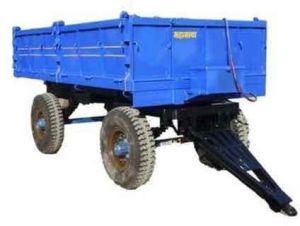
Engineered for large-scale agricultural contractors and heavy utility tractors (50-90 HP). Features a heavy-cast multi-speed gearbox allowing rotor speed adjustment between 180 RPM and 250 RPM to handle diverse crop residue and soil moistures.
Get a Quote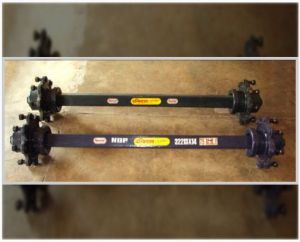
Designed for sub-50 HP utility tractors. Optimized weight distribution prevents front-end tractor lifting while delivering deep seedbed tilling in rice paddies, wheat fields, and vegetable farms.
Get a Quote4. Global Sourcing & Future Procurement Trends (2025–2030)
As the global agricultural machinery landscape transitions toward smart farming, efficiency optimization, and reduced carbon footprints, equipment buyers must align their procurement strategies with several industry shifts:
Trend 1: Adoption of Multi-Speed Gearboxes & PTO Telemetry Integration
Single-speed tillers are increasingly being replaced by multi-speed transmission systems. By changing spur gear pairings inside the main gearbox housing, operators can adjust rotor shaft speeds to match soil density without running tractor engines at excessively high RPMs. This feature reduces engine stress and achieves up to 15% fuel savings. Future smart rotavators are incorporating temperature and vibration sensors in the gearbox to transmit telemetry data directly to tractor ISOBUS displays.
Trend 2: Advanced Surface Engineering & Nanostructured Coatings
Soil abrasion remains a major operational cost driver. Leading manufacturers are investing in thermal spray tungsten-carbide hardfacing along blade cutting edges. While increasing initial blade cost by 20-30%, hardfacing extends blade operational lifespan by up to 300% in sandy and abrasive soils, significantly lowering maintenance downtime for commercial farm managers.
Trend 3: Shift from Chain Drive to Sealed Helical Gear Side Transmission
Global buyers in North America, Europe, and Australia are overwhelmingly shifting toward heavy-duty side gear drives. The mechanical failure of chain drives under heavy rock impact leads to costly downtime. Gear drives enclosed in heavy ductile iron casings with double-lip oil seals provide leak-free protection and high torque handling capability.
Trend 4: Sustainable Tillage & Min-Till Residue Incorporation
Modern conservation agriculture emphasizes minimal soil disturbance. Rotavators fitted with reverse-rotation rotors (counter-rotating tillers) bury crop stubble deeper while leaving finer soil on top. This practice enhances soil organic matter decomposition, prevents soil erosion, and improves water retention capabilities.
5. Corporate Competence & Manufacturing Excellence: Why Partner with ARS Industries
Headquartered in Shamli, Uttar Pradesh, India, ARS Industries (established in 2014, formerly Asa Ram & Sons) has established itself as an ISO-compliant manufacturer and exporter of heavy-duty agricultural implements, steel wheel rims, and industrial vehicle axles.
Our Shamli manufacturing facility spans dedicated forge shops, CNC machining centers, dynamic rotor balancing rigs, and automated powder coating lines. We produce over 5,000 rotary tiller assemblies and 50,000 precision steel components annually, serving OEMs and distributor networks across India, Nepal, Sri Lanka, and expanding global export markets.
Key Enterprise Advantages for B2B Buyers & Importers:
- Precision Machining & Dynamic Balancing: Rotor shafts undergo computer-controlled dynamic balancing to eliminate high-speed vibration, protecting tractor PTO bearings and extending seal lifespan.
- In-House Metallurgical Testing: Raw materials (boron steel, high-carbon steel, ductile iron castings) are verified using optical emission spectrometers and hardness testing units before processing.
- OEM White-Labeling & Customization: We offer custom frame colors, branded laser-cut logo plates, specific gear ratio engineering, and custom blade configurations for international distributor brands.
- Container Load Optimization: Rotavators can be shipped in Semi-Knocked-Down (SKD) or Completely-Knocked-Down (CKD) packing formats, maximizing 20ft and 40ft High-Cube container volume efficiency to reduce per-unit freight costs.
- Comprehensive Quality Audit Trail: Every batch undergoes full 100% inspection including gear backlash testing, oil-seal pressure checks, and paint thickness (micron) verification.
6. Comprehensive B2B Sourcing FAQ (Frequently Asked Questions)
7. Final Procurement Action & OEM Inquiry
Whether you are an established agricultural machinery distributor looking to expand your implement product line, a tractor brand seeking a reliable OEM contract manufacturer, or a commercial farming cooperative sourcing heavy-duty rotavators for regional distribution, ARS Industries provides engineering experience, manufacturing capacity, and export reliability.
Contact our engineering and export sales team today to request detailed technical catalogs, request CAD models, or obtain factory-direct FOB/CIF pricing for container-load orders.
Request Factory-Direct Pricing & Technical Specifications
Speak directly with our technical sales engineers for customized OEM solutions and bulk export quotations.
Get a Quote