Articles, guides, and trends on steel wheel rims, industrial axles, trailer manufacturing, and agricultural equipment.
China has become a major source of automotive wheel components, including steel rims for passenger cars, commercial vehicles, and demanding road conditions. Yet a manufacturer’s location alone says little about product quality. Buyers need to examine forming accuracy, weld consistency, coating coverage, load ratings, and traceable inspection records. A rim that looks smooth under warehouse lights still needs dependable dimensions and repeatable performance.
Quality expert W. Edwards Deming’s principle, “Quality comes not from inspection, but from improvement of the production process,” offers a useful lens for evaluating Automotive Steel Wheel Rims. His words are not about wheel rims specifically, but they highlight why stable processes matter. This guide introduces leading Chinese manufacturers and the practical factors behind their reputations, from production capability and testing practices to export experience and product range. Details matter.
Comparisons should remain careful. Public specifications can vary by model, and supplier claims deserve verification through current documents, samples, and direct technical questions. Price matters, but so do lead times, communication, and consistent batch quality. No supplier is flawless. A missed coating edge or an unclear tolerance can create real trouble later. The goal is not to crown a universal winner, but to help readers identify manufacturers that fit their vehicle, volume, and quality requirements.
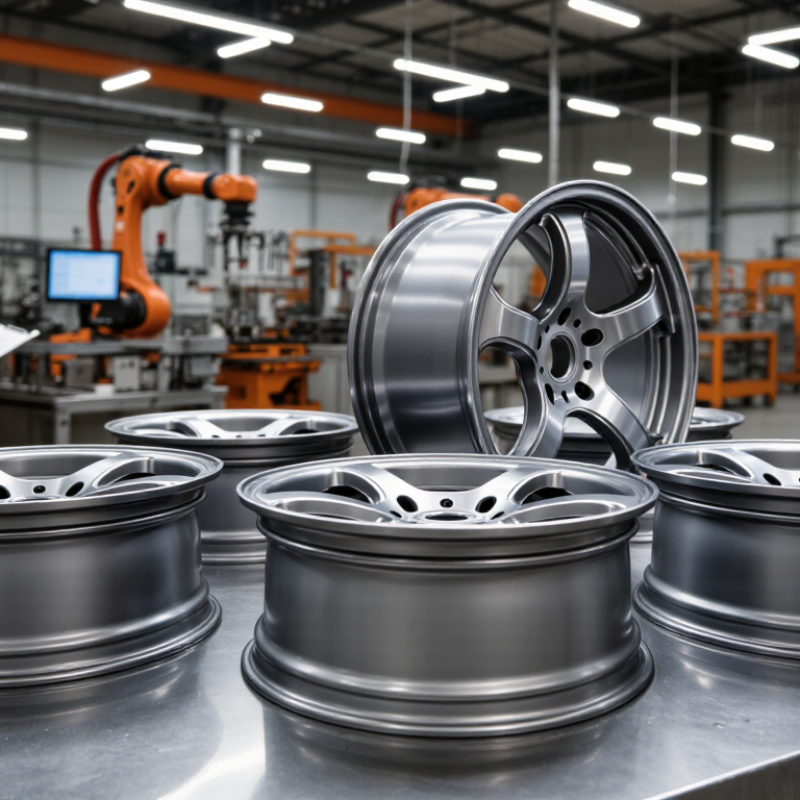
Steel wheel rims must balance load capacity, stiffness, weight, and cost. A formed disc joins the rim barrel, while shaped flanges help retain the tire bead. Bead-seat dimensions, runout, and bolt-hole accuracy affect fit and vibration. Small details matter. Many rims use carbon steel for consistent forming and weldability. Protective coatings help limit corrosion from water, grit, and road salt. Their choice should suit the expected service conditions, not just the finish.
Design requirements vary by application. Passenger vehicles need dependable fit, brake clearance, and manageable mass. Commercial vehicles may face heavier loads, frequent stops, and rougher roads. Engineers assess material thickness, spoke or disc geometry, weld quality, and fatigue performance together. A strong rim is not automatically a suitable one; vehicle specifications and tire dimensions must match. Testing and inspection provide useful checks, although real-world wear can reveal weaknesses that controlled tests miss.
Tips: Confirm the required size, offset, bolt pattern, and load rating before selection. Inspect the coating and weld areas for damage. If vibration persists, check balance and fitment rather than assuming the rim is at fault.
Top Automotive Steel Wheel Rim Manufacturers in China
How Steel Wheel Rims Are Manufactured in China
Steel wheel production commonly starts with sheet steel cut into round blanks. Presses shape the center disc, including its mounting face and ventilation openings. Separately, a steel strip is rolled into a rim profile, then joined at its seam. The exact sequence can vary between factories and wheel designs.
Workers or automated systems weld the disc to the rim. The assembly is then sized and checked for dimensions, runout, and weld consistency. Some production lines also conduct air-leak tests for wheels designed for tubeless tires. Surface cleaning and protective coating help resist corrosion. A clean-looking weld is not proof of a sound joint, so inspection matters. Small process differences can affect fit and balance.
Tips: Ask how the factory controls rim dimensions and verifies weld quality. Request inspection records for the specific wheel model. Check coating coverage around seams and edges, where missed areas can be easy to overlook. Manufacturing is precise, but no process is perfect; confirm that samples match your application before ordering.
When evaluating Chinese automotive steel wheel rim manufacturers, look beyond a low quotation. Ask for the steel grade, rim dimensions, load rating, and inspection limits in writing. A capable supplier should explain how stamping, welding, and finishing affect strength and consistency. Details matter.
Request recent test records for radial fatigue, cornering fatigue, and impact performance, and check that the tested sample matches the proposed production design. Review dimensional reports for runout and mounting-face accuracy. Ask how welds are inspected and how coating thickness is measured, especially around edges and drain holes. Ask for evidence. A factory visit can help confirm equipment and process controls, but it cannot replace records from routine production. That distinction is easy to miss.
Also assess traceability, corrective-action procedures, packaging, and communication. Can the manufacturer link a finished rim to its material batch and inspection results? Are packaging samples tested for handling and transport? Compare the response quality, not just the response speed. Clear answers with dated documents are more useful than broad promises. I would still avoid treating one successful sample as proof of stable output; production variation deserves ongoing checks. Ask for a small trial order and agree on measurable acceptance criteria before scaling up.
| Evaluation criterion | What to assess | Evidence to request or verify | Practical evaluation guidance |
|---|---|---|---|
| Quality management | Whether the production site operates a documented quality management system suitable for automotive manufacturing. | Current certificates, certificate scope and site details; audit records; corrective-action and change-control procedures. | IATF 16949 is an automotive quality management system standard. Confirm that any certificate is valid and covers the actual manufacturing site and relevant activities. |
| Product fitment and specifications | Accuracy and completeness of the wheel specification, including diameter, width, offset (ET), bolt pattern (PCD), center bore and mounting details. | Controlled drawings, tolerance records, sample measurements and a clearly defined vehicle or application fitment list. | Check every dimension against the buyer’s approved drawing and application requirements. A matching nominal size alone does not confirm fitment. |
| Load capacity and design validation | Whether the declared wheel load rating and design validation meet the requirements of the intended vehicle and market. | Rated-load documentation, test reports for the relevant design and size, and traceable links between reports, drawings and production parts. | Confirm applicable test methods and acceptance limits with the vehicle maker, customer or destination-market requirements; do not infer suitability from appearance or dimensions. |
| Material and incoming inspection | Control of steel grade, thickness and incoming material consistency. | Material certificates, supplier approval records, incoming inspection plans and lot traceability. | Verify that material documentation matches the approved specification and can be traced from incoming coil or sheet to finished production lots. |
| Forming and welding process control | Control of forming operations, rim and disc joining, weld quality and process repeatability. | Process flow, equipment maintenance records, welding procedure controls, inspection results and nonconformance records. | Review how critical process parameters are monitored and how out-of-specification parts are identified, contained and dispositioned. |
| Dimensional and runout inspection | Measurement of critical dimensions, roundness and lateral or radial runout against the approved product specification. | Inspection plans, calibrated-gauge records, sample reports and measurement-system controls. | Agree the measurement points, methods and tolerances before production. Review actual results rather than relying only on a general statement of compliance. |
| Coating and corrosion protection | Surface preparation, coating consistency, adhesion and corrosion performance appropriate to the specified finish and service environment. | Coating specifications, process-control records, thickness checks and test reports using the agreed test method and acceptance criteria. | Set the coating system and performance requirements in the purchase specification; corrosion-test results depend on the method, duration and acceptance criteria. |
| Traceability and nonconformance control | Ability to trace finished wheels to production records and manage defects, complaints and corrective actions. | Lot or serial identification, production records, complaint logs, root-cause analyses and corrective-action follow-up. | Check whether the supplier can demonstrate a traceability exercise and define how affected lots would be identified and contained. |
| Production capacity and delivery | Available capacity for the required product mix, production planning, lead-time management and contingency arrangements. | Capacity and utilization data, production schedules, on-time delivery records and documented business-continuity plans. | Validate capacity for the specific tooling and wheel specifications requested, not just the factory’s overall stated output. |
| Packaging and export readiness | Protection against handling and transport damage, correct export documentation and packaging suitable for the destination route. | Packaging specifications, sample shipment records, inspection photos and shipping-document procedures. | Agree packaging, labeling, shipment terms and required documents before ordering; check packaging against the expected transport and storage conditions. |
| Commercial transparency and communication | Clarity of quotations, tooling charges, minimum order quantities, payment terms, warranty scope and response to technical questions. | Itemized quotation, written terms, approved samples, change-notification process and named technical and commercial contacts. | Compare offers on equivalent specifications and delivery terms. Record agreed requirements in the purchase order and controlled technical documents. |
Evaluation note: Requirements and acceptance limits should be defined for the specific wheel design, vehicle application and destination market. Verify certificates and test reports with the issuing or testing organization where appropriate.
Leading Automotive Steel Wheel Rim Manufacturers in China are judged by more than production volume. Reliable suppliers control steel selection, forming, welding, and coating as one connected process. On a factory visit, look for clean weld zones, consistent bead profiles, and clearly labeled material batches. Small variations matter. They can affect balance, fit, and long-term performance.
Experienced manufacturers should explain how they manage rim dimensions, radial runout, and load testing. Ask how inspection results are recorded and how production changes are communicated. A capable engineering team can discuss drawings, tolerances, and sample revisions without relying on vague assurances. Factory capacity is useful, but it does not guarantee consistent quality. Even a polished sample may not reflect routine production, so verify process controls and repeatability.
Tips: Request samples from a normal production run, not only a specially prepared batch. Compare measurements against your approved drawing, and ask for test records tied to identifiable lots. Check packaging too: steel rims can arrive with coating damage if separators or handling methods are poor. A supplier may answer most questions well and still need closer review in one area. That is worth noting, not overlooking.
Chinese wheel-rim suppliers benefit from a large automotive base, but production scale alone does not prove product quality. OICA reported 30.16 million vehicles produced in China in 2023. That figure signals manufacturing depth, not automatic consistency between factories. Scale is not quality.
For buyers, request a current IATF 16949 certificate and confirm that its scope covers the actual production site. Check sample records for steel grade, rim runout, weld inspection, coating thickness, and dimensional tolerances. Ask for fatigue and impact test reports, with test conditions matching the intended wheel application. A certificate alone is not proof. Independent test results and traceable batch records offer stronger evidence, though reviewing them takes time.
Export capability also means more than offering a low quotation. Suppliers should provide clear packing specifications, shipment documents, production lead times, and a process for handling nonconforming batches. OICA’s vehicle-production data does not measure wheel exports, so buyers should verify export experience directly through references and shipment records. Details matter. Carton protection, moisture control, and readable labeling can affect a rim’s condition after a long sea journey. These checks are mundane, perhaps, but skipping them can be costly.
Sheet steel is cut into round blanks. Presses shape the center disc, while steel strips form the rim. The parts are welded together, sized, inspected, and coated.
Ask for dimensional reports, weld inspection records, and test results. Check runout, mounting-face accuracy, and coating around seams and edges. Small gaps matter.
Request recent radial fatigue, cornering fatigue, and impact test records. Confirm each test sample matches the proposed production design.
No. Appearance alone is not enough. Ask how weld quality is checked and request records tied to the wheel model or production lot.
Look for labeled steel batches, consistent weld beads, and controlled production equipment. A visit helps, but routine inspection records still matter.
Request samples from a normal production run. Compare their measurements with the approved drawing. One polished sample proves little.
Steel rims can suffer coating damage during handling or transport. Check separators and packaging samples. This detail is easy to miss.
Start with a small trial order and agree on measurable acceptance criteria. Track material batches and inspection results. I might still miss a detail, so keep checking.
Automotive Steel Wheel Rims remain an important choice for passenger vehicles, commercial fleets, and other applications that require strength, durability, and practical cost control. Their performance depends on thoughtful design, suitable steel grades, precise dimensions, and protective surface finishes. In China, production commonly involves forming steel sheets, shaping and joining rim components, machining key areas, and conducting inspections to confirm consistency and fit.
When evaluating Chinese manufacturers, buyers can consider production capacity, engineering support, quality-control procedures, material traceability, and the ability to meet project specifications. Certifications and documented testing can help demonstrate that products follow relevant quality and safety requirements, while export experience and responsive communication support smoother international sourcing. Comparing these factors alongside product range, lead times, and after-sales service can help purchasers identify suppliers suited to their needs.