
ARS Knowledge Hub

Industry Insights &
Technical Knowledge

Articles, guides, and trends on steel wheel rims, industrial axles, trailer manufacturing, and agricultural equipment.

0%

Choosing Industrial Vehicle Axles for a global fleet means matching hardware to daily work, not simply chasing a high load rating. A quarry hauler faces sharp impacts and abrasive dust; a warehouse tug may spend hours on smooth concrete, starting and stopping often. Those jobs stress axles differently. Details matter. This guide introduces ten options for buyers comparing drive axles, steer axles, and integrated assemblies across heavy trucks, material-handling equipment, and specialty vehicles. It considers load capacity, torque transfer, ground clearance, braking compatibility, housing strength, sealing, and maintenance access. Specifications offer a starting point, not a verdict.

A useful comparison also asks how an axle performs after months of vibration, temperature swings, and uneven loading. Buyers should check test data, published duty limits, parts availability, and technical support in the target market. A low purchase price can become expensive when seals fail far from a service center. Yet premium components are not automatically the right choice. Fit comes first. An axle can look excellent on paper and still mismatch a vehicle’s tires, gearing, or work cycle. This shortlist is a practical screening tool, not a universal ranking. Confirm dimensions and operating limits with the manufacturer before specifying a unit.
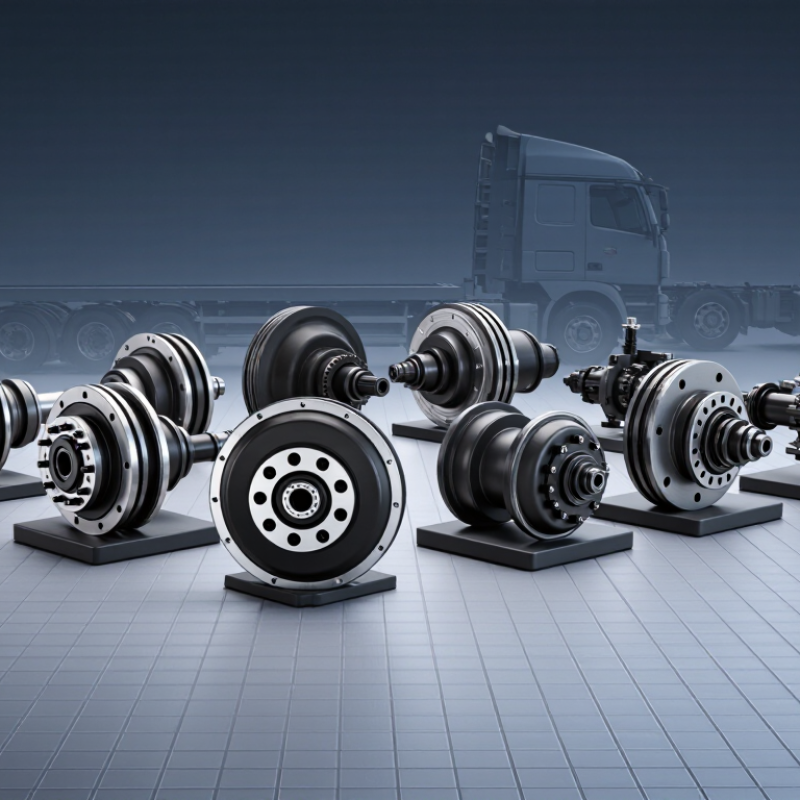
10 Best Industrial Vehicle Axles for Global Buyers

Industrial Vehicle Axles: Types, Components, and Core Functions

Industrial vehicle axles support the vehicle’s weight and keep wheels aligned under changing loads. Drive axles transmit torque through shafts and differential gears; non-driving axles mainly carry load. Steering axles also guide wheel direction. Tandem axles spread heavy loads across multiple wheel sets. Small details matter. A typical assembly includes a housing, bearings, hubs, seals, and often brakes. On a forklift, for example, uneven floor joints can add repeated shock loads to bearings and axle housing. A published load rating can still mislead if duty cycle, tire size, and terrain differ from test conditions.

The International Energy Agency’s Global EV Outlook 2024 reports nearly 54,000 electric truck sales worldwide in 2023, around 35% above 2022. This shift raises interest in electric drive axles, which combine motor, reduction gears, and differential functions in a compact assembly. But integration does not remove heat, lubrication, or service-access concerns. For buyers, compare rated axle load with real operating weight, including attachments and cargo. Check torque capacity, gear ratio, brake arrangement, and sealing against dust or water. I would also question any selection based on load rating alone. Repeated low-speed turns can stress components differently from steady road travel. A brief inspection for oil seepage and abnormal backlash can reveal problems early.

Key Criteria for Comparing Axles Across Global Markets

Comparing industrial vehicle axles across global markets starts with the work they must perform. Record the vehicle’s loaded weight, peak loads, travel speed, and hours per shift. A warehouse tug and a mining hauler may share a weight rating, yet face very different shock loads. Ask suppliers how ratings were established. A single number can hide important assumptions.

Then examine the operating environment. Mud, salt, fine dust, steep grades, and frequent washing affect seals, bearings, and brake choices. Check whether the axle suits the vehicle’s wheel hubs, mounting points, and braking system. Small mismatches can turn installation into costly rework. Measure twice. Also compare service access: Can a technician inspect seals without removing nearby equipment? Are replacement parts available near the vehicle’s operating region? Delivery estimates deserve scrutiny, especially for remote sites.

Finally, compare evidence, not just catalog claims. Request load-test details, maintenance intervals, and clear limits for continuous operation. Confirm that technical documents use units your engineering team can verify, and that support staff understand local working conditions. Regional requirements may differ, so ask buyers and qualified specialists to confirm suitability for the intended market. A polished spreadsheet can still mislead if it ignores downtime or uneven ground. I would also leave room for a field trial; paper specifications rarely capture every vibration, turning radius, or operator habit. One awkward result is useful. It can reveal a poor fit before a fleet-wide purchase.

Ten Industrial Vehicle Axles for Global Buyers

Industrial buyers compare more than axle names. A rigid drive axle suits many forklifts and work trucks. A steering axle helps equipment turn in tight yards. Non-drive support axles carry loads without supplying traction. Tandem axles spread weight across two axle lines. Trailer axles support hauled loads. Articulated-machine axles accommodate machines that steer at a central joint.

Other options serve more specific needs. Portal axles raise ground clearance beneath the chassis. Planetary-reduction axles provide high wheel torque at low speeds. Independent-suspension axles let wheels respond separately to uneven ground. Electric drive axles integrate propulsion components near the wheels. These ten designs are not interchangeable. Fit depends on load, speed, terrain, and operating hours. A heavy-duty axle may be unnecessary for a light-duty vehicle.

Check rated capacity against real working loads, including impacts from ramps or rough floors. Inspect lubrication points, seals, brake compatibility, and access to replacement parts. Ask suppliers for test data and service intervals, then verify details against the vehicle design. Global shipments add practical questions: lead time, technical documentation, and local maintenance capability. Even so, specifications can look reassuring on paper. A short trial under actual site conditions may reveal heat, noise, or steering issues that a catalogue misses. There is no perfect shortlist.

10 Best Industrial Vehicle Axles for Global Buyers - Ten Industrial Vehicle Axles for Global Buyers

The axle types below cover common industrial vehicle applications. Load ranges are indicative examples, not universal ratings; actual capacity depends on axle design, vehicle configuration, duty cycle, and operating conditions. Confirm the manufacturer’s technical documentation before specifying or purchasing.

Axle type Typical vehicle Indicative rated axle-load range Drive configuration Typical operating conditions Key buying considerations
Forklift drive axle Counterbalance forklift About 2–10 t, application-dependent Driven front axle; steering commonly at rear Warehouses, yards, and industrial floors Check wheel loads, reduction ratio, braking, and compatibility with the vehicle’s rated capacity.
Forklift steering axle Counterbalance forklift About 1–6 t, application-dependent Non-driven steering axle in many designs Tight turning areas and frequent direction changes Review steering geometry, articulation range, tire fitment, and allowable static and dynamic loads.
Compact industrial drive axle Compact wheel loader or utility vehicle About 3–8 t Driven axle; open or limited-slip differential options Light earthmoving and mixed indoor/outdoor work Compare ground clearance, axle ratio, lubrication requirements, and available service parts.
Telehandler axle Telescopic handler About 5–12 t Typically driven axles; steering modes vary by vehicle Construction sites, farms, and uneven ground Verify steering-mode compatibility, articulation angle, braking capacity, and duty-cycle limits.
Backhoe loader axle Backhoe loader About 4–10 t Commonly driven rear axle; front drive may be fitted Road travel combined with digging and loading Check torque capacity, differential lock availability, braking, and front/rear axle coordination.
Wheel-loader heavy-duty axle Medium or large wheel loader About 10–30 t Driven axles, often with differential-lock options Quarries, stockpiles, and material-handling sites Assess peak wheel loads, traction requirements, thermal performance, and oil-cooling needs.
Articulated dump truck axle Articulated hauler About 15–30 t per axle, depending on vehicle class Multiple driven axles, often with traction-control features Rough, muddy, and changing off-highway terrain Prioritize impact-load capacity, sealing, traction, and compatibility with the vehicle’s braking system.
Rigid dump truck axle Off-highway rigid dump truck About 25–60 t per axle, depending on truck class Heavy-duty driven rear axles; front axle may be driven or non-driven Mining and large-scale earthmoving Confirm gross vehicle weight limits, tire loads, brake heat capacity, and service support for the site.
Industrial tractor drive axle Agricultural or industrial tractor About 3–12 t Rear drive, with optional front-wheel drive Field work, towing, and yard operations Match axle ratio and torque rating to transmission, tire size, implement loads, and traction needs.
Airport ground-support vehicle axle Baggage tractor or pushback tug About 2–12 t, depending on vehicle and duty Driven axle; configuration varies by vehicle design Frequent starts, stops, and low-speed towing on paved surfaces Check low-speed torque, braking performance, tire availability, and suitability for continuous-duty operation.

Note: The listed load ranges are broad, indicative market examples. Axle ratings should be checked against the vehicle’s technical specification, loading pattern, terrain, speed, and applicable local regulations.

Matching Axle Designs to Vehicles and Operating Conditions

Choosing an industrial vehicle axle starts with the work, not the catalogue. A forklift moving dense loads across smooth warehouse floors may need a different axle setup from a loader crossing uneven gravel. Check the vehicle’s rated load, travel speed, wheel size, and daily duty cycle together. One number rarely tells the whole story. Frequent starts and tight turns can create more stress than steady travel, especially on heavy equipment.

Terrain matters just as much. Solid tires and a compact axle may suit clean indoor floors, while rough yards can call for greater ground clearance and stronger components. For vehicles that turn often, verify steering geometry and axle articulation; poor matching can cause tire scrub and uneven wear. Consider braking capacity and service access, too. A design that is difficult to inspect may cost more time during routine maintenance. Ask suppliers for load and duty-cycle data, then compare it with actual operating records. A neat spreadsheet can still miss a muddy ramp or an overloaded shift. That is worth admitting. Recheck the choice after a few months of use, when real wear patterns begin to show.

Global Sourcing, Standards, and Supplier Evaluation

For global buyers, selecting an industrial vehicle axle starts with operating conditions, not catalog claims. Record gross vehicle weight, axle load, duty cycle, terrain, speed, and expected service hours. A forklift on smooth concrete needs different priorities from a yard tractor crossing uneven gravel. Small details matter. Check dimensions, mounting points, hub configuration, braking interfaces, and lubrication requirements against the vehicle drawing. Request load ratings, material specifications, heat-treatment records, and fatigue-test methods. Standards differ by destination and vehicle category, so confirm applicable requirements with qualified engineers and documented test evidence. A certificate alone does not prove an axle suits your application.

Supplier evaluation should go beyond price and delivery estimates. Review inspection procedures, component traceability, change-control practices, and how defects are reported and corrected. Ask for sample inspection records and clarify which tests are performed on every unit versus selected batches. If possible, assess a production sample under realistic loads before approving a larger order. Compare warranty terms, spare-parts availability, packaging, and lead-time assumptions in writing. A tidy scorecard helps, but it can miss problems caused by unclear drawings or changing vehicle specifications. Recheck critical dimensions with the engineering team; this step may feel repetitive, yet it can prevent costly fitment delays.

10 Best Industrial Vehicle Axles for Global Buyers — Global Sourcing, Standards, and Supplier Evaluation

Selected legal road-load benchmarks for axle sourcing discussions (metric tonnes)

How to use this chart: These figures are regulatory road-load limits, not axle product ratings or a ranking of suppliers. Actual permissible loads depend on vehicle configuration, road class, and local rules. When evaluating suppliers, confirm the axle’s rated capacity, test documentation, applicable standards, and destination-market compliance.

Sources: EU Directive 96/53/EC (11.5 t for a driving axle); U.S. 23 CFR § 658.17 (20,000 lb single-axle limit, approximately 9.07 t). Verify current requirements for the specific route and vehicle.

FAQS

What information should buyers collect before comparing industrial vehicle axles?

Record loaded weight, peak loads, travel speed, and operating hours per shift. A tug and a mining hauler can face different shock loads.

Why can one axle capacity rating be misleading?

The rating may depend on unstated assumptions. Ask how it was established and request supporting load-test details.

How does the operating environment affect axle selection?

Mud, salt, fine dust, steep grades, and frequent washing can affect seals, bearings, and brakes. Small details matter.

What should buyers check for vehicle compatibility?

Confirm wheel hubs, mounting points, wheel size, and braking-system fit. Measure twice; installation rework can be costly.

Which axle designs serve different industrial vehicle needs?

Steering axles help with tight turns; tandem axles spread weight across two axle lines. Portal designs can raise ground clearance.

How should terrain and work patterns influence the choice?

Frequent starts and tight turns may create more stress than steady travel. Rough gravel can also require greater clearance and stronger components.

What service and supply details deserve attention?

Check inspection access, maintenance intervals, replacement-part availability, and delivery estimates. Remote sites can complicate repairs.

Why is a field trial useful after reviewing specifications?

A short trial may reveal heat, noise, tire scrub, or steering issues. I might still miss something on paper.

Conclusion

Industrial Vehicle Axles are essential to the strength, stability, and performance of trucks, buses, trailers, and other heavy-duty vehicles. This overview explains the main axle types, their key components, and how they support load carrying, power transmission, steering, and braking. It also introduces ten common axle options for global buyers, highlighting differences in configuration, capacity, and intended use.

Choosing the right axle means comparing load ratings, durability, weight, maintenance needs, and compatibility with the vehicle and its operating conditions. Terrain, climate, duty cycle, and service availability can all affect performance over time. Buyers should also consider applicable technical standards, documentation, quality controls, and supplier support when evaluating sourcing options. By matching axle design to vehicle requirements and working conditions, operators can make more informed choices and improve reliability, safety, and long-term value.

Sophie

Sophie

Sophie is a seasoned marketing professional with a deep expertise in our company’s products and services. With a keen understanding of market dynamics, she plays a pivotal role in communicating the unique benefits of our offerings to diverse audiences. Sophie is not only dedicated to enhancing our......
WhatsApp Us