
ARS Knowledge Hub

Industry Insights &
Technical Knowledge

Articles, guides, and trends on steel wheel rims, industrial axles, trailer manufacturing, and agricultural equipment.

0%

Moving heavy loads is not just a question of strength. It is a question of control, stability, and repeatable handling. A steel cart can carry tools, components, or packed goods across a workshop or warehouse, but its value depends on the job it must perform. A Bullock Steel Cart is worth considering when loads are substantial and daily use demands a sturdy frame.

The scale of workplace risk deserves attention. The U.S. Bureau of Labor Statistics reported 2.6 million nonfatal workplace injury and illness cases among private-industry employers in 2023. That figure covers many causes; it does not show that carts alone prevent injuries. It does, however, underline why material movement deserves practical planning. A cart with an appropriate rated capacity, suitable wheels, and a stable platform can help workers move loads without carrying each item by hand. Details matter. A poorly balanced stack or a rough threshold can still create trouble.

This article looks at why buyers choose steel carts for demanding work, and what to check before purchasing one. We will consider frame durability, load ratings, wheel performance, maneuverability, and routine maintenance. Picture a loaded cart crossing a concrete floor: loose hardware, uneven weight, or undersized casters can quickly become the weak point. Steel is not a magic answer. The right cart must match the load, route, and working conditions—and that choice deserves a second look before the cart is put to work.
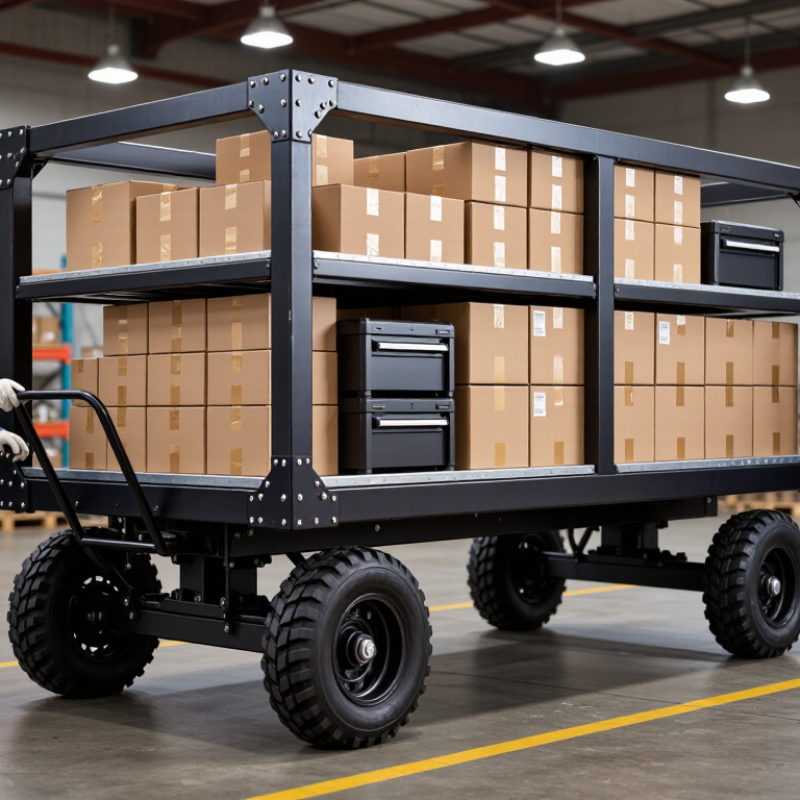
Why Choose a Bullock Steel Cart for Heavy Loads?

What Defines a Bullock Steel Cart: Frame, Axle, Deck, and Draft Gear?

Why Choose a Bullock Steel Cart for Heavy Loads?

What Defines a Bullock Steel Cart: Frame, Axle, Deck, and Draft Gear?

A bullock steel cart carries heavy loads only when its structure shares weight evenly. The frame needs cross-members and reinforced joints to resist twisting over ruts. Weld quality matters; small cracks can grow under repeated jolts. The axle and bearings must suit the intended load, wheel size, and terrain. Small details matter. A flat steel deck is easy to clean, while a textured surface and low rails help keep sacks or timber in place. But a thicker deck adds dead weight and reduces useful payload. That trade-off deserves a real load check, not a guess.

Draft gear transfers the animal’s pull to the cart. FAO’s Animal Traction: A Training Manual describes sustained ox draft force at roughly 10–14% of body weight, with conditions affecting the figure. This is pulling force, not cart payload. Fit the yoke and drawbar to keep the pull aligned and avoid uneven pressure. A level drawbar also helps limit side loads on the axle. One compromise is easy to miss: stronger steel may improve durability, yet make the empty cart harder to move. Recheck welds, wheel alignment, and deck deflection after loaded trips; field wear rarely follows a perfect specification.

Steel Benchmarks: ASTM A36’s 250 MPa Yield Strength and 7,850 kg/m³ Density

A Bullock steel cart is worth considering when loads are dense, awkward, or handled repeatedly. ASTM A36/A36M specifies a minimum yield strength of about 250 MPa for common plate thicknesses. That benchmark describes when steel begins to deform permanently, not the cart’s safe working load. AISC’s Steel Construction Manual uses a structural-steel density of about 7,850 kg/m³. That figure helps estimate frame weight and material use. Density is not strength.

In practical terms, a stout steel deck can support concentrated loads, such as a machine part resting on a small footprint. But the frame, welds, axles, and wheels share the work. A strong deck alone is not enough. Uneven floors can also shift the load and stress one wheel more than expected. I would treat material figures as a starting point, not a substitute for checking the cart’s rated capacity.

Tips: Compare the cart’s stated load rating with your heaviest real load, including how it sits on the deck. Check welds and wheel attachments regularly. A small crack matters. ASTM material properties and AISC design references are useful benchmarks, but the finished cart’s construction determines how it performs.

Payload Planning: Calculate Gross Load from Axle and Wheel Ratings

A bullock steel cart can carry dense loads, but its safe payload is set by the weakest rated component. Check the axle’s capacity and each wheel’s load rating; do not assume the cart frame determines the limit. The Tire and Rim Association Year Book provides load-and-inflation tables for tires, so compare ratings at the actual inflation pressure. Add the wheel ratings, then compare that total with the axle and cart ratings. Use the lowest compatible limit.

For example, if an axle is rated for 1,200 lb and four wheels are rated for 400 lb each, the axle is the limit. If the cart itself weighs 300 lb, the remaining payload is 900 lb, provided those ratings include the cart’s tare weight. Keep the load centered over the axle. A heavy crate pushed to one side can overload a wheel before the total capacity is reached. Uneven ground also creates jolts; follow the cart maker’s guidance for reducing loads in those conditions.

Tips: Weigh the empty cart, check each rating plate, and record the figures. Recheck them after repairs. I still double-check the units; kilograms and pounds are easy to mix up.

Wheel and Ground Checks: Match Rated Capacity to Load and Terrain

A steel cart’s rated capacity is a limit, not a target for every situation. Check the rating before loading, then consider how the weight is distributed. A dense item placed at one end can strain the frame and make steering harder. Keep heavy materials low and centered when possible. Small details matter.

Wheel condition and ground surface affect how safely a cart carries weight. Look for worn tread, loose fittings, cracks, or wheels that wobble under pressure. On smooth concrete, a load may roll easily; gravel, wet grass, and uneven paving add resistance. That extra drag increases the effort needed to move the cart and can make a full load less manageable. A soft patch changes everything.

Match the load to both the cart’s rating and the route. If the path includes slopes or rough ground, use a more conservative load and move slowly. Test the cart with a modest weight before committing to a heavy trip. Listen for scraping or unusual rattling, and check whether the wheels turn freely afterward. It is easy to focus on capacity and overlook the ground. Recheck both when conditions change.

Routine Safety Checks: Inspect Welds, Axles, Tires, and Fasteners Before Use

A bullock steel cart can carry heavy loads only when its supporting parts are sound. Before loading, park it on firm, level ground and look closely at every weld, especially around the frame corners and drawbar. Watch for hairline cracks, flaking paint, rust trails, or gaps that were not there before. A clean surface helps reveal damage. If a weld looks suspect, do not load the cart; ask a qualified repairer to assess it. A quick glance is easy, but it can miss a small crack.

Check the axles for bending, unusual movement, or fresh grease leaks. Turn each tire by hand and inspect the tread and sidewalls for cuts, bulges, embedded stones, and uneven wear. Set tire pressure to the cart maker’s stated range, not by appearance alone. Small details matter. Inspect nuts, bolts, pins, and clips for looseness, missing pieces, or damaged threads. Tighten only as specified; more force is not always safer. I would also roll the empty cart a short distance and listen for scraping or knocking. That extra check takes a minute, yet it is easy to skip when work is waiting. If anything feels uncertain, keep the cart unloaded until the issue is checked.

Why Choose a Bullock Steel Cart for Heavy Loads? - Routine Safety Checks: Inspect Welds, Axles, Tires, and Fasteners Before Use
Inspection Point How to Check Acceptable Condition If a Problem Is Found
Welds and frame Look over welds, joints, and frame members for cracks, separation, severe rust, or visible bending. No visible cracks, loose joints, or structural distortion. Do not load or use the cart. Arrange a qualified repair or replace the damaged part.
Axles and wheel retention Check that axles appear straight and that wheels, axle nuts, pins, or other retainers are present and secure. Turn each wheel by hand if safe to do so. Wheels remain retained and rotate without obvious wobble, binding, or unusual noise. Take the cart out of service until the cause is inspected and corrected.
Tires and wheels Inspect tires for cuts, bulges, embedded objects, and uneven wear. Check inflation against the cart or tire manufacturer’s recommended pressure. Tires are undamaged and properly inflated; wheels show no visible cracks or deformation. Do not operate with a damaged or underinflated tire. Repair or replace it before use.
Fasteners Check accessible bolts, nuts, and other fasteners for looseness, missing parts, or visible damage. Fasteners are present and secure, with no obvious movement at connections. Use the specified replacement parts and tightening instructions; do not guess at a torque setting.
Load capacity and balance Confirm the cart’s rated capacity from its markings or manual. Position the load evenly and secure items that could shift. The load is within the stated capacity, stable, and distributed to avoid excessive tipping or shifting. Reduce or rearrange the load before moving the cart.
Handle and connection points Check the handle, hitch, and attachment points for looseness, cracks, or deformation. Confirm any coupling is properly engaged. Controls and connections are secure and function as intended. Do not move the cart until the connection or damaged component has been corrected.
Before every use: Keep the cart unloaded during the inspection. If a defect could affect safe operation, stop using the cart until it has been repaired or assessed by a qualified person.

FAQS

How do I find a cart’s safe payload?

Compare the axle, wheel, and cart ratings. Use the lowest compatible limit. Check whether ratings include the cart’s empty weight.

How do I calculate payload when the cart’s weight is separate?

Subtract the empty cart’s weight from its limiting gross-load rating. For example, a 1,200-pound axle and a 300-pound cart leave 900 pounds, if the rating includes the cart.

Should I add the ratings of all four wheels?

You can total the wheel ratings, then compare that figure with the axle and cart ratings. The weakest compatible rating sets the limit.

Does the load’s position matter?

Yes. Keep heavy items low and centered over the axle. A crate pushed to one side can overload one wheel. Small details matter.

How should I account for rough or sloped ground?

Use a more conservative load on slopes, gravel, wet grass, or uneven paving. Move slowly; rough ground can add jolts and resistance.

What should I inspect before loading?

Check each rating plate, tire pressure, tread, fittings, and wheels. Look for cracks or wobbling. A loose wheel deserves attention.

Is it useful to test the cart before carrying a heavy load?

Yes. Try a modest load first. Listen for scraping or rattling, then check that the wheels still turn freely.

What should I recheck after repairs or when conditions change?

Recheck ratings after repairs, and inspect the route when its surface changes. Record the figures. I still double-check the units; pounds and kilograms are easy to mix up.

Conclusion

A Bullock Steel Cart is built for demanding loads through the combined strength of its frame, axle, deck, and draft gear. When made from ASTM A36 steel, its structure benefits from a yield strength of about 250 MPa and a density of 7,850 kg/m³. These figures help describe the material, but safe capacity depends on the complete cart design and its rated components.

Before loading, calculate the gross load, including the cart’s own weight, and compare it with the axle and wheel ratings. Consider the ground and terrain as well: soft, uneven, or sloped surfaces can affect stability and performance. Regular checks of welds, axles, tires, and fasteners can help identify wear or damage before use. Careful load planning and routine inspection support safer, more reliable cart operation.

Amelia

Amelia

Amelia is a dedicated marketing professional with extensive expertise in her field, making her an invaluable asset to our company. With a deep understanding of our products and services, she consistently delivers insightful and informative blog posts that reflect the core of our business. Amelia’s......
WhatsApp Us