Articles, guides, and trends on steel wheel rims, industrial axles, trailer manufacturing, and agricultural equipment.
Choosing the right Forklift Split Wheel Rim is not a simple matter of matching diameter. It affects load stability, tire seating, operator safety, and maintenance time. A rim that looks correct may still fail under the wrong load, offset, or operating condition.
Industrial wheel specialist Daniel R. Mercer explains, “A split rim should fit the forklift’s working reality, not merely its tire size.” That principle guides this article. Before purchasing, examine the forklift’s model, axle specifications, rim width, bolt pattern, and approved tire dimensions. Check the manufacturer’s data plate and service manual. Measure carefully. Guesswork is expensive.
The working environment also matters. Smooth warehouse floors demand different choices from rough yards, cold storage rooms, or construction areas. Carrying dense loads can increase rim stress. Frequent turning can expose weak seating surfaces. Corrosion, bent flanges, worn lock rings, and damaged fasteners require close inspection. Small defects can become serious problems.
Experience teaches another lesson. Replacement parts are not always interchangeable, even when their measurements seem similar. Some listings use incomplete descriptions. Others overlook load ratings. This is where many buyers, including experienced technicians, may need to pause and verify.
This guide compares the details that influence a safe selection. It considers compatibility, material quality, maintenance access, supplier reliability, and total operating cost. It also acknowledges an uncomfortable point: the cheapest rim may create the highest long-term expense. Good selection is careful, documented, and specific to the forklift’s actual work.
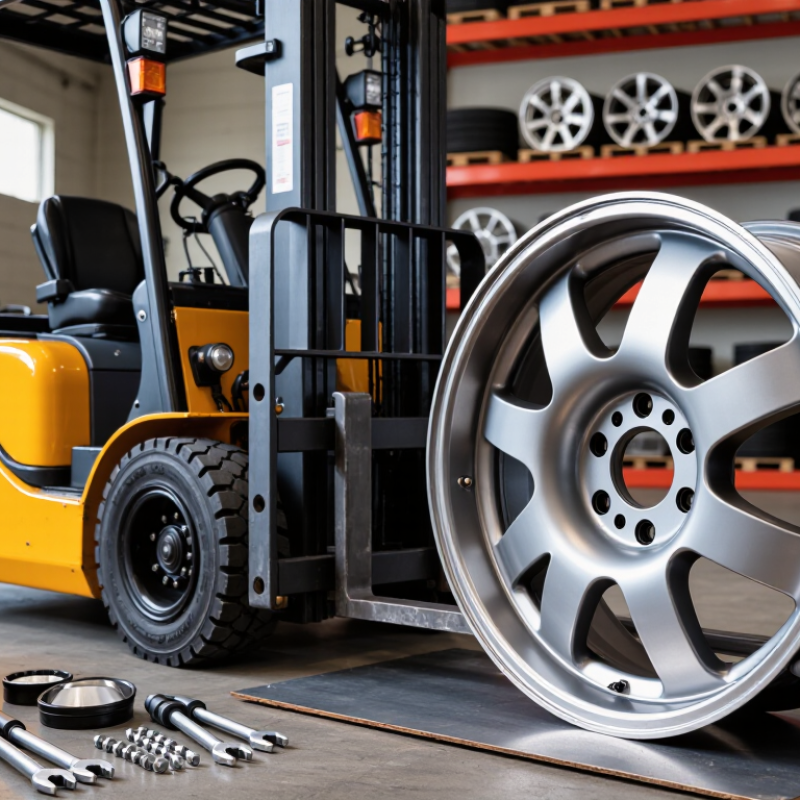
The data plate is the safest starting point for selecting a split wheel rim. Record the tire size, rim size, rated load, and recommended inflation pressure. Do not rely on a rim that “looks close.” A small diameter or width mismatch can damage the bead, distort the tire, or reduce stability. The Tire and Rim Association Year Book provides dimensional and load-inflation tables for checking these measurements. Use those tables with the forklift manufacturer’s specifications, not as a replacement for them.
The plate also shows the truck’s approved capacity, which matters when matching a rim and tire assembly. OSHA reports approximately 85 forklift-related deaths and 34,900 serious injuries each year in the United States. Incorrect tire equipment can increase handling risks, especially during turning or uneven-floor operation. Check whether the stated pressure applies to pneumatic tires; cushion tires follow different requirements. The awkward part is that plates can be faded, dirty, or partly unreadable. I would stop there.
Clean the plate and photograph its details before ordering. Verify bolt-hole pattern, rim width, offset, and split-ring condition against the 2025 Tire and Rim Association reference tables. Inspect the replacement ring for cracks, corrosion, and deformation. A new rim is not automatically safe. If the load rating or pressure is unclear, obtain written confirmation from a qualified tire-and-rim technician before installation. Guessing saves minutes, sometimes.
How to Choose a Forklift Split Wheel Rim?
Choosing a forklift split wheel rim starts with accurate OEM data, not visual similarity. Match the rim diameter and width exactly. A small difference can alter tire seating, steering response, and load stability. Measure the existing rim only after removing dirt, rust, and damaged hardware.
Check the bolt pattern and PCD carefully. Count every bolt hole, then measure the pattern using the correct method for the hole layout. PCD means the diameter of the circle passing through the bolt-hole centers. Guesswork is risky. A rim may fit five bolts but still have the wrong PCD. The holes can appear aligned while placing stress on the fasteners.
Offset also deserves close attention. It controls how far the wheel sits inward or outward from the mounting face. Incorrect offset may cause clearance problems near the brake assembly, steering components, or frame. Record the mounting face position with a straightedge and depth gauge. Compare those measurements with the equipment manual or verified OEM specifications.
Split rims require more than a size check. Inspect the rim halves, locking components, bolt seats, and mating surfaces for cracks or distortion. Replace questionable parts rather than forcing them together. This is where rushed inspections often fail. I would also recheck the measurements, because one millimeter can matter. Tire size, load rating, and operating surface should match the rim selection and the forklift’s working conditions.
Use the following reference table to compare the existing rim with the original equipment data. Nominal rim sizes are commonly used in forklift applications, but bolt pattern, PCD, center bore, offset, and load capacity must be confirmed for the exact truck and axle.
Important: The reference configurations below are selection examples, not universal interchange specifications. Do not install a rim unless every critical dimension and the required load rating are confirmed.
| Reference Rim Size | Nominal Diameter | Nominal Width | Typical Tire Size | Bolt Pattern | PCD Reference | Center Bore | Offset | Typical Use | Required Verification |
|---|---|---|---|---|---|---|---|---|---|
| 5.00-8 | 8 in / 203.2 mm | 5 in / 127.0 mm | 18 × 7-8 or equivalent pneumatic size | Usually 4 or 5 studs; axle-specific | Measure across matching stud centers | Measure actual hub clearance | Match OEM value; do not estimate | Compact and light-duty forklifts | Confirm rim contour, valve-hole position, stud diameter, and load rating |
| 6.00-9 | 9 in / 228.6 mm | 6 in / 152.4 mm | 21 × 8-9 or equivalent pneumatic size | Commonly 4 or 5 studs; axle-specific | Record bolt count and exact PCD in mm | Must clear the hub without forced fitting | Compare mounting-face-to-centerline dimension | Medium-duty forklift front or drive axle | Check brake, steering, and suspension clearance at full lock |
| 6.50-10 | 10 in / 254.0 mm | 6.5 in / 165.1 mm | 23 × 9-10 or equivalent pneumatic size | Often 5 or 6 studs; not interchangeable by appearance | Use the OEM PCD; convert inches to mm using 1 in = 25.4 mm | Measure bore diameter with a caliper | Must preserve the specified track width | General-purpose medium-duty forklifts | Confirm split-rim halves, lock ring, and side-ring compatibility |
| 7.00-12 | 12 in / 304.8 mm | 7 in / 177.8 mm | 27 × 10-12 or equivalent pneumatic size | Typically 5 or 6 studs; verify axle drawing | PCD must be measured from the original rim or hub | Bore must not contact the hub shoulder incorrectly | Check inner-side clearance and wheel protrusion | Higher-capacity forklift applications | Verify axle load, rim load rating, and fastener seating type |
| 8.25-15 | 15 in / 381.0 mm | 8.25 in / 209.6 mm | 8.25-15 pneumatic or equivalent industrial tire | Commonly 6 studs; exact count and spacing are axle-specific | Record PCD in mm and compare with the OEM drawing | Check hub pilot and brake-component clearance | Match original offset to avoid altered axle loading | Heavy-duty forklift front axle | Confirm rim construction, lock-ring system, and maximum rated load |
| Dimension | How to Check | Acceptance Rule |
|---|---|---|
| Rim diameter | Read the stamped rim marking or measure the bead-seat diameter. | Must match the tire bead diameter exactly. |
| Rim width | Measure between the bead seats, not the outside edges. | Must fall within the tire manufacturer’s approved rim-width range. |
| Bolt pattern and PCD | Count the studs and measure the pitch-circle diameter using the correct multi-stud method. | Bolt count, PCD, stud size, and nut-seat type must all match. |
| Offset | Measure from the wheel mounting face to the rim centerline; positive offset places the mounting face outward from the centerline. | Match the OEM specification to maintain clearance and axle geometry. |
| Load capacity | Check the rim rating against the axle load and tire load capacity. | The lowest-rated component determines the safe wheel-and-tire capacity. |
Safety note: Split rims and lock-ring assemblies can store substantial energy. Use the correct service cage, inflation equipment, tools, and trained procedures when removing or installing a split wheel rim.
A split wheel rim must carry more than the forklift’s empty weight. Check the manufacturer’s maximum axle load, rated payload, attachment weight, and load distribution. A practical calculation starts with the heaviest loaded axle, not the vehicle’s average weight. Divide the axle load between wheels only when the axle design supports equal loading. Uneven floors, sharp turns, and hard braking can increase wheel loading. A neat calculation can still be wrong.
Match the rim’s rated capacity with the tire’s marked load index. Industry tables from the Tire and Rim Association Year Book and the ETRTO Standards Manual show that tire capacity depends on size, inflation pressure, and operating speed. For example, load index 121 represents 1,450 kilograms in standard tire-load tables. That figure applies to the tire under specified conditions, not automatically to every rim. The rim must meet or exceed the required load per wheel, with the correct offset and mounting configuration.
ISO 3691-1 provides safety requirements for industrial trucks, including stability and load handling. Use its principles alongside the truck maker’s axle data and the rim manufacturer’s test rating. Inspect bolt holes, flange seating, cracks, and rim deformation before fitting. Split rims are unforgiving. Never mix a high-load tire with an underrated rim. I would also recheck pressure after the first working shift, because pressure loss quietly reduces tire capacity and changes handling.
Choosing a forklift split wheel rim starts with safety, not appearance. Match the rim to the forklift’s approved tire size, load rating, bolt pattern, offset, and valve position. A rim that fits physically may still create unsafe handling or clearance problems. Check the service manual and the truck’s identification plate before ordering.
OSHA 29 CFR 1910.178 requires powered industrial trucks to remain in safe operating condition. Damaged, cracked, bent, or heavily corroded rims should be removed from service. Split-rim servicing can release dangerous stored energy. For multi-piece rim work, OSHA 29 CFR 1910.177 may also apply. Use trained, qualified personnel, proper tools, and a restraining device. ANSI/ITSDF B56.1 reinforces controlled maintenance, inspection, and safe replacement practices. Never mix mismatched rim components. That shortcut can fail badly.
Tips: Inspect the rim near the bead seat, lock ring, bolt holes, and valve opening. Look for fresh rust dust, stretched studs, uneven wear, or impact marks. Confirm the rim’s markings against the equipment records. Deflate the tire completely before disassembly, and never strike a pressurized assembly. Keep bystanders away. I have seen clean-looking rims hide distortion around the lock-ring area. Visual inspection alone is not enough. When measurements are uncertain, pause and ask a qualified technician to verify them.
Choosing a forklift split wheel rim starts with verified specifications, not appearance. Match the rim diameter, width, bolt pattern, load rating, and tire size. Confirm that both rim halves belong to the same approved assembly. Mixing unmatched parts can create uneven seating and sudden failure. Check the service manual and rim markings before ordering.
Manufacturer torque, inflation pressure, and inspection requirements must guide installation. Use a calibrated torque wrench and follow the stated tightening sequence. Do not guess torque values from similar equipment. Inflate only to the tire manufacturer’s cold pressure, using a safety cage and a remote air line. Pressure can rise during operation. Inspect the rim before every installation for cracks, bent flanges, stretched bolt holes, severe corrosion, and damaged valve components. I have seen clean-looking rims fail around hidden bolt holes. Visual checks are useful, but they are not perfect.
Tips: Record the rim number, torque value, pressure, and inspection date. Recheck torque only when the manufacturer requires it. Keep mating surfaces clean and dry, unless the manual specifies another method. If specifications are missing, stop and obtain reliable technical data. That pause may feel inefficient. It is often the safer decision. Replacing one questionable fastener is cheaper than correcting a loose split-rim assembly.
Match the diameter, width, bolt count, PCD, offset, and valve position. Do not rely on visual similarity. Even one millimeter may matter.
Count every bolt hole carefully. Measure the circle through the bolt-hole centers. A rim with matching holes may still have the wrong PCD.
Offset controls the wheel’s inward or outward position. Incorrect offset can reduce clearance near brakes, steering parts, or the frame. Use a straightedge and depth gauge.
Check the rim halves, lock-ring area, bolt seats, and mating surfaces. Look for cracks, bending, corrosion, rust dust, and impact marks. Clean-looking parts can still hide distortion.
Yes. It may have the wrong load rating, tire size, offset, or bolt pattern. Confirm the equipment manual and identification plate before ordering.
Deflate the tire completely before removing components. Use trained personnel, suitable tools, and a proper restraining device. Never strike a pressurized assembly. Keep bystanders away.
No. Remove cracked, bent, distorted, or heavily corroded rims from service. Replace questionable parts instead of forcing them together.
Ask for verification when measurements conflict or remain uncertain. Recheck the data before installation. I would pause rather than guess.
Choosing the right Forklift Split Wheel Rim begins with the forklift’s data plate. Confirm the required tire size, load rating, rim dimensions, and recommended inflation pressure before selecting a replacement. The rim must match the original equipment specifications, including diameter, width, bolt pattern, PCD, and offset. Even a small mismatch can affect tire seating, steering, stability, and overall operating safety.
Next, verify that the rim’s capacity is suitable for the maximum axle load and compatible with the tire’s load index. Installation and servicing should follow OSHA 29 CFR 1910.178 and ANSI/ITSDF B56.1 requirements for split-rim assemblies, including proper handling and inspection procedures. Always use the manufacturer’s specified wheel-nut torque, tire inflation pressure, and inspection intervals. Before returning the forklift to service, check for cracks, distortion, corrosion, damaged fasteners, and incorrect assembly. When specifications are unclear, consult qualified maintenance personnel rather than relying on visual similarity alone.