
ARS Knowledge Hub

Industry Insights &
Technical Knowledge

Articles, guides, and trends on steel wheel rims, industrial axles, trailer manufacturing, and agricultural equipment.

0%

Choosing the right Forklift Lock Ring Type Rim begins with a clear understanding of the machine, tire, and working environment. A rim that looks correct may still create serious fitment problems. Small differences in bead-seat diameter, flange shape, or lock-ring design can affect tire security and vehicle stability.

“Rim compatibility is a measurement problem before it becomes a purchasing problem,” says Daniel Mercer, a senior industrial wheel engineer with more than twenty years of field experience. His advice reflects a practical truth: never select a rim from appearance alone. Record the forklift model, axle position, tire size, rim width, bolt pattern, and manufacturer markings. Check them twice.

Details matter.

A warehouse forklift may need a different solution from a machine operating on rough concrete or outdoor yards. Inspect the lock ring for distortion, rust, cracks, and uneven seating. Look closely around the ring groove. A damaged groove can prevent proper engagement, even when the rim dimensions appear correct. Load capacity also deserves attention. The rim must support the forklift’s rated load, not merely the tire’s advertised capacity.

This guide will explain how to compare Forklift Lock Ring Type Rim designs, verify measurements, and recognize unsafe assumptions. Some specifications may be difficult to read after years of paint and abrasion. That is where many decisions become uncertain. If measurements conflict, pause and consult the rim manufacturer or a qualified forklift technician. A rushed replacement can cost more than the rim itself.
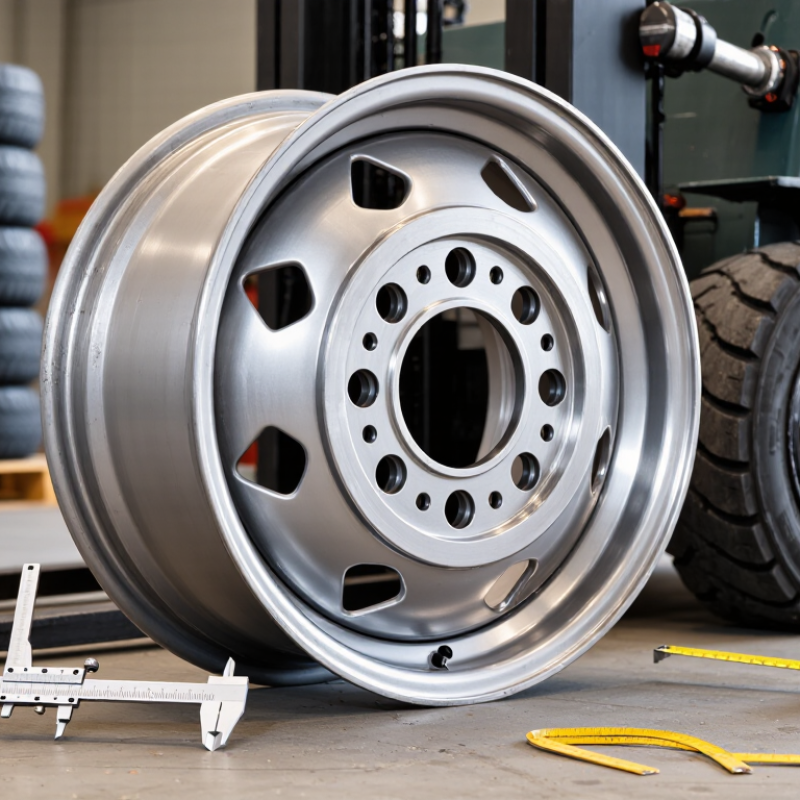
How to Choose a Forklift Lock Ring Type Rim?

Forklift Lock Ring Type Rims: Purpose and Basic Design

A forklift lock ring type rim uses a removable ring to hold the tire and bead components in place. Its basic design supports easier tire installation on certain industrial wheels. The rim usually includes a rim base, side ring, lock ring, and bead seat. Together, these parts manage tire pressure and operating loads. The lock ring must fit its matching groove precisely.

In workshop inspections, I check the rim diameter, width, bolt pattern, and tire size before choosing a replacement. Load capacity matters too. A rim used on a loaded forklift faces repeated impacts, braking forces, and uneven warehouse floors. Inspect the ring groove for dents, rust, or stretching. Check the side ring for cracks and distortion. Small damage can prevent full seating. That risk is easy to underestimate.

Choose the correct lock ring type for the exact rim assembly, not only the tire dimensions. Compare the old parts with reliable technical drawings or service data. Never force a ring into a mismatched groove. It may look secure but fail during inflation or operation. I have seen selections based on appearance alone, and that approach is unreliable. Measure twice. Record the rim markings, dimensions, and observed wear. If the design remains unclear, consult a qualified wheel technician before installation.

Identify the Forklift’s Rim, Tire, and Load Requirements

How to Choose a Forklift Lock Ring Type Rim?

Choosing a forklift lock ring type rim starts with identification, not appearance. Record the rim diameter, width, bolt pattern, and offset from the data plate or service manual. Then read the tire size and construction carefully. Solid and pneumatic tires may require different rim designs, even when their diameters look similar. Measure twice. An incorrect lock ring can seat poorly, damage the tire bead, or create dangerous separation during operation.

Load requirements need equal attention. Check the forklift’s rated capacity, load center, attachment weight, and typical working surface. The tire and rim assembly must support the actual axle load, not only the forklift’s empty weight. Uneven floors, sharp turns, and frequent braking increase stress. A tire with a higher advertised capacity does not make an unsuitable rim safe. The complete assembly must match the required load rating and operating conditions.

Inspect the lock ring groove, flange, and mating surfaces for bends, cracks, heavy rust, or packed debris. During workshop inspections, familiar rim sizes often cause rushed decisions. That shortcut can lead to costly rework. Confirm the ring orientation and fit with the service documentation before installation. Use suitable tools, keep the assembly restrained, and have a qualified technician verify the final fit. Small measurement errors can become large problems under load.

Compare Lock Ring Rim Types and Their Compatibility

How to Choose a Forklift Lock Ring Type Rim?

Compare Lock Ring Rim Types and Their Compatibility

Choosing a lock ring rim starts with identifying its construction. Common options include two-piece, three-piece, and five-piece designs. Each uses different rings, bead seats, and locking grooves. A ring from one design may look similar but still fit incorrectly. Never rely on appearance alone.

Check the forklift’s tire size, rim diameter, rim width, bolt pattern, center bore, and offset. These measurements control physical compatibility. Also confirm whether the wheel uses a tube-type or tubeless tire. Some split rims require a specific tube and flap. A matching tire diameter does not guarantee a safe rim match.

Inspect the lock ring profile carefully. It must sit evenly in the groove, without cracks, distortion, or heavy corrosion. The side ring should remain fully seated after inflation. Use the equipment manual or a qualified wheel specialist to verify the part numbers and measurements. A short measurement can prevent a costly mistake. I have found that rushed replacements often focus on tire size and ignore ring design. That shortcut needs more reflection. Never mix rings from different rim assemblies. Replace damaged components as a matched set when required. During service, use proper inflation equipment and stand clear of the assembly. Compatibility is not only about fitting the axle; it also depends on the complete rim, tire, ring, and valve arrangement.

Check Safety Features, Measurements, and Installation Conditions

How to Choose a Forklift Lock Ring Type Rim?

A lock ring rim must match the forklift’s load, tire, and operating surface. Start with the rim diameter and measured width, not the old part number alone. Check the tire bead seat, lock-ring groove, bolt pattern, and center bore with calibrated tools. A difference of only a few millimeters can create uneven seating.

OSHA’s powered industrial truck safety materials report about 85 forklift-related fatalities and 34,900 serious injuries annually in the United States. Rim selection deserves similar caution.

Safety features are practical, not decorative. Choose a rim with a correctly formed lock ring, visible seating marks, and no cracks near the ring groove. During installation, clean rust and dirt from every contact surface. Confirm the ring is fully seated before inflation.

OSHA 1910.177 requires suitable restraining equipment for servicing multi-piece rim wheels. Use an approved safety cage, remote inflation line, and pressure gauge. Never stand beside the ring. Small errors matter.

Measurements should be recorded before removal. Note tire size, recommended pressure, rim width, and the forklift’s rated capacity. Installation conditions also affect safety: a level floor, stable lighting, and trained personnel reduce mistakes. Cold weather can hide damaged metal under dirt. That is easy to miss. Industry maintenance guidance repeatedly emphasizes inspection, correct tools, and controlled inflation, yet rushed workshops still overlook ring deformation. A second inspection is worth the extra minute.

Choose the Right Rim and Verify Maintenance Requirements

How to Choose a Forklift Lock Ring Type Rim?

Choose the Right Rim and Verify Maintenance Requirements

Selecting a lock ring type rim starts with compatibility, not appearance. Confirm the tire size, rim diameter, bead seat, load rating, and valve location. The lock ring must match the rim profile exactly. A clean rim can still be wrong. Mismatched parts may cause uneven bead seating, air loss, or sudden tire failure. OSHA reports approximately 85 forklift-related fatalities and 34,900 serious injuries annually in the United States. That risk makes careful rim selection essential.

Maintenance requirements deserve equal attention. OSHA’s Powered Industrial Trucks standard, 29 CFR 1910.178(q)(7), requires trucks to be examined before service. Remove any truck with unsafe conditions. Check the rim for cracks, bent flanges, corrosion, and distorted ring grooves. Inspect the lock ring after every tire installation. It must sit evenly around the groove, without gaps or forced sections. Use the equipment manufacturer’s torque and inflation specifications. Never rely on memory.

Keep inspection records with the truck’s service history. Note rim size, tire type, installation date, and observed damage. Industry maintenance reports commonly identify poor inspection discipline as a recurring contributor to equipment downtime. The exact cause can be harder to prove. That is worth questioning. A rim may pass a visual check yet fail after heat, impact, or repeated overload. Use trained technicians and approved tools for demounting and inflation. Small shortcuts become expensive quickly.

How to Choose a Forklift Lock Ring Type Rim?

Compare rim construction by the number of separate components that require inspection before selection and during maintenance. Multi-piece lock-ring rims require careful verification of ring seating, bead areas, and component condition.

Maintenance reminder: Always confirm rim compatibility with the tire, forklift load rating, rim diameter, and the applicable service manual. Never reuse damaged or deformed lock rings, side rings, or rim components.

FAQS

What is a forklift lock ring type rim?

It uses a removable ring to secure the tire and bead components. The assembly usually includes a rim base, side ring, lock ring, and bead seat. These parts manage tire pressure and operating loads. The ring must match its groove precisely.

Which measurements should I check before choosing a replacement rim?

Check the tire size, rim diameter, rim width, bolt pattern, center bore, and offset. Confirm the load rating and valve location. Also identify whether the tire is tube-type or tubeless. Do not guess.

Does a matching tire size guarantee rim compatibility?

No. A matching tire diameter does not prove the rim is safe. The ring profile, bead seat, groove, and tire construction must also match. A clean-looking rim can still be unsuitable. That detail is easy to miss.

How can I inspect a lock ring before installation?

Look for cracks, dents, distortion, heavy corrosion, and stretched areas. Check that the groove remains clearly shaped. The side ring should sit evenly without visible gaps. Small damage can prevent full seating.

Can I use a lock ring from another rim assembly?

Do not mix rings from different rim assemblies. Similar-looking rings may have different profiles or locking grooves. Use matching components confirmed by technical drawings or service data. Appearance alone is unreliable.

What problems can a mismatched lock ring cause?

It may cause uneven bead seating, air loss, or sudden tire failure. The ring could appear secure but move during inflation. Repeated impacts and overloaded operation increase the danger. The shortcut is not worth it.

What safety steps are needed during rim service?

Use approved demounting and inflation equipment. Stand clear of the assembly during inflation. Follow the specified inflation pressure and fastener torque. Never force a ring into a groove.

What maintenance records should be kept for these rims?

Record the rim size, tire type, installation date, and observed damage. Inspect the assembly before service and after every tire installation. Remove equipment with unsafe rim conditions. Keep records carefully. Mistakes happen.

Conclusion

Choosing the correct Forklift Lock Ring Type Rim is essential for safe, stable, and efficient material handling. Start by understanding the rim’s purpose and basic design: a lock ring rim secures the tire and supports the wheel assembly under heavy loads. Identify the forklift’s rim specifications, tire dimensions, operating environment, and maximum load requirements before making a selection. The rim must match the tire size, axle configuration, and working conditions, including solid or pneumatic tire use.

Next, compare available lock ring rim types and confirm their compatibility with the forklift. Carefully check rim diameter, width, bolt pattern, offset, and lock ring design, while inspecting safety features such as secure seating and proper retention. Installation should be performed on a clean, undamaged assembly with suitable tools and correct procedures. Finally, choose a rim that meets the forklift’s operating demands and establish regular maintenance checks for cracks, corrosion, deformation, loose components, and tire seating. Proper verification and maintenance help extend service life and reduce operational risks.

Sophie

Sophie

Sophie is a seasoned marketing professional with a deep expertise in our company’s products and services. With a keen understanding of market dynamics, she plays a pivotal role in communicating the unique benefits of our offerings to diverse audiences. Sophie is not only dedicated to enhancing our......
WhatsApp Us