
ARS Knowledge Hub

Industry Insights &
Technical Knowledge

Articles, guides, and trends on steel wheel rims, industrial axles, trailer manufacturing, and agricultural equipment.

0%

Choosing the right Heavy Duty Industrial Axle starts with the work it must perform, not just the machine it fits. A loaded forklift crossing a concrete yard places different demands on an axle than a slow-moving cart on a smooth factory floor. Note the operating load, wheel configuration, travel speed, braking needs, and daily duty cycle. These details help narrow the options before dimensions and mounting points are checked.

Industrial axle engineer Daniel Mercer offers this practical guideline: “Match the axle to the hardest routine load, then verify the fit against the machine.” This is an original summary of sound selection practice, not a verified quotation from a published source. The principle is simple. A unit that looks adequate on paper may overheat, wear unevenly, or create handling problems when loads shift or surfaces become rough. Check the manufacturer’s rated capacity and operating limits, and confirm compatibility with the vehicle’s hubs, brakes, and suspension.

A good choice also accounts for maintenance access and replacement parts. Ask how the axle will be inspected, lubricated, and serviced in real working conditions. Small details matter: a grease fitting blocked by a frame rail can turn routine maintenance into a hassle. Some specifications may remain uncertain until the machine is measured in person. That is worth admitting. This guide outlines the key checks for comparing axle types and selecting a dependable option for the application.
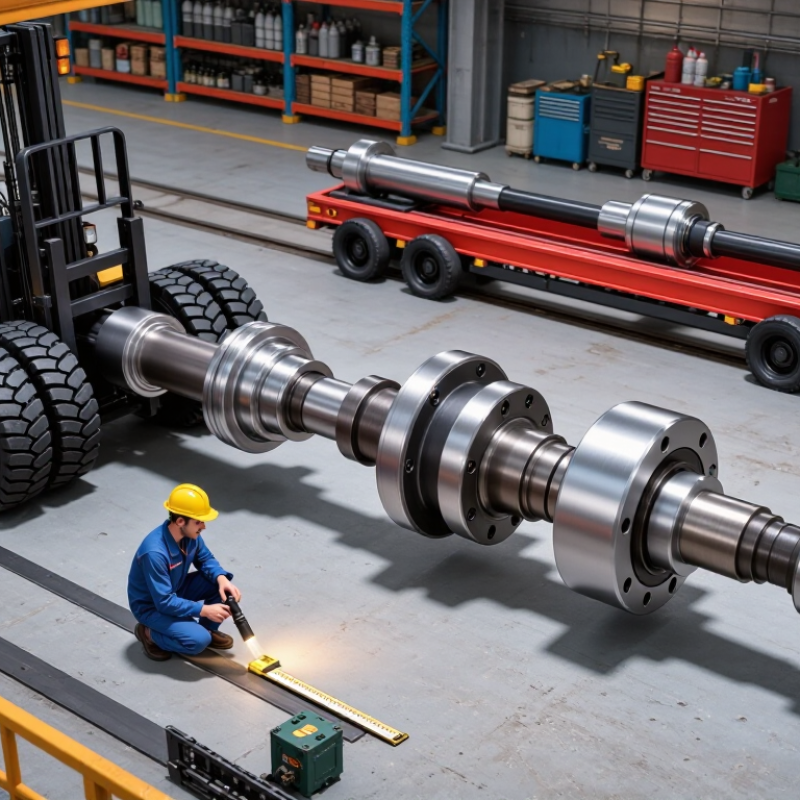
How to Choose the Right Heavy Duty Industrial Axle?

Understanding Heavy-Duty Industrial Axles and Their Applications

How to Choose the Right Heavy Duty Industrial Axle?

Understanding Heavy-Duty Industrial Axles and Their Applications

A heavy-duty industrial axle transfers power and carries substantial loads in demanding work environments. It supports equipment such as forklifts, loaders, tow tractors, and specialized material-handling vehicles. Unlike standard road axles, industrial axles often face repeated impacts, low-speed torque, and uneven surfaces. Their working environment matters. Dust, water, heat, and limited turning space can affect performance. A warehouse vehicle needs different protection from a machine operating near crushed stone or wet concrete.

The load rating should reflect real operating conditions, not only the vehicle’s empty weight. Engineers should examine static load, dynamic load, impact force, and duty cycle. A forklift carrying metal coils may require stronger housing and higher torque capacity than a vehicle moving lightweight pallets. Gear reduction, brake integration, ground clearance, and steering angle also influence axle selection. Small measurement errors can create large maintenance problems. Shaft dimensions, mounting points, and wheel-end clearances require careful verification.

Maintenance teams should review service records before approving a replacement axle. Frequent seal damage may indicate contamination, poor alignment, or an unsuitable sealing system. Field inspections often reveal overlooked details, such as heat discoloration near bearings or uneven tire wear. No selection is perfect. An axle may meet its rated capacity yet perform poorly under severe shock loading. Engineers should question the duty cycle, inspect the installation area, and allow practical access for lubrication and repairs. Reliability depends on both axle design and daily operating discipline.

Assessing Load Capacity and Operating Conditions

Choosing a heavy duty industrial axle starts with the real load, not the catalog rating. Record payload, equipment weight, torque, braking forces, and the heaviest impact during operation. An axle carrying 8 tonnes continuously may face far higher stress on ramps or uneven ground.

The U.S. Federal Highway Administration’s Truck Size and Weight Study recognizes federal limits of 20,000 pounds for a single axle and 34,000 pounds for a tandem axle, subject to bridge-formula requirements. European road guidance commonly permits up to 11.5 tonnes on a powered axle, depending on vehicle configuration. These figures are useful references, not automatic specifications. Industrial machinery often experiences shock loads that road ratings do not fully represent. I would leave a safety margin, although the correct margin depends on duty cycles, speed, and fatigue testing.

Operating conditions can quietly destroy a suitable axle. Check soil, gradients, turning frequency, water, dust, and ambient temperature. A quarry vehicle needs different sealing and impact resistance than a warehouse tug. SAE J1095 testing principles can help evaluate axle durability, but laboratory results may not mirror daily abuse. Real measurements matter.

Tips: Weigh the machine in working condition. Log peak loads. Inspect splines and seals after early trials. Ask for fatigue-test evidence, not only static capacity. Do not ignore wheel-end temperature. That detail is easy to miss.

Matching Axle Design to Vehicle and Equipment Requirements

Choosing a heavy duty industrial axle starts with the vehicle’s actual working conditions, not its brochure rating. Identify gross vehicle weight, payload distribution, wheel configuration, and expected axle load. A loader moving wet aggregate needs different support from a trailer carrying steel coils.

Torque matters as much as capacity. Match the axle to engine output, gearbox ratios, tire diameter, and operating speed. Low-speed work on steep grades demands strong torque transfer and effective heat control. Frequent highway travel may require different gearing, bearings, and brake specifications. Check clearances carefully. A small mismatch can cause tire rubbing or driveline angles.

Terrain also changes the design decision. Mud, loose gravel, and uneven floors place repeated shock loads on housings, shafts, and suspension mounts. Sealed bearings and corrosion-resistant finishes can improve service life in wet environments. However, these features cannot replace correct maintenance access. Technicians need room to inspect seals, check lubricant levels, and measure wear.

In field inspections, I have seen operators choose an axle only by maximum load. That approach often misses duty cycle and braking demands. A safer selection uses verified calculations, supplier drawings, and applicable safety requirements. Leave a sensible working margin, but avoid excessive capacity that adds unnecessary weight and cost. The best match may not be obvious at first. Recheck the assumptions before ordering.

How to Choose the Right Heavy Duty Industrial Axle? — Matching Axle Design to Vehicle and Equipment Requirements

Vehicle or Equipment Operating Profile Axle Load and Duty Inputs Axle Design to Consider Gearing and Traction Braking and Validation Checks
Highway heavy truck Long-distance operation, sustained road speeds, and frequent loaded travel. Maximum loaded axle loads; load distribution; annual distance; road grade; expected service life. Rate the axle for the maximum permitted and calculated axle load. Consider a single-reduction drive axle where its torque capacity and efficiency meet the application. Select the final-drive ratio to suit engine speed, transmission gearing, tire rolling radius, and target road speed. Specify a differential appropriate to expected road conditions. Confirm compatibility with the vehicle’s service and parking brake systems, wheel ends, tires, and suspension. Check axle ratings against applicable vehicle limits.
Stop-start refuse or municipal truck Frequent starts, stops, low-speed maneuvering, and repeated operation on urban routes. Loaded axle weights; stop frequency; route gradients; daily operating hours; impact exposure during collection work. Prioritize torque capacity, thermal durability, and robust wheel-end components. Assess the duty cycle rather than relying on vehicle weight alone. Choose gearing for frequent acceleration and low-speed work. A traction-assisting differential may be appropriate where slippery surfaces or uneven access routes are common. Check brake thermal capacity for repeated stops, along with axle-housing clearance, suspension loads, and inspection access.
Off-highway dump truck Heavy loads on rough, uneven, or steep terrain, often at low speeds. Maximum payload and axle distribution; dynamic wheel loads; gradeability; shock loading; operating hours per shift. Use an axle designed for the calculated peak loads and severe duty cycle. Verify housing, shafts, bearings, and wheel ends for combined bending and torque loads. Match reduction and differential capability to tire size, grade, surface conditions, and required tractive effort. Consider controlled differential locking when the operating terrain requires it. Verify service-brake capacity, heat management, ground clearance, and compatibility with the vehicle’s tires and suspension. Use the equipment manufacturer’s load and duty data.
Agricultural tractor or field equipment Variable-speed work in fields, with changing traction, implement loads, and occasional road travel. Axle loads with mounted or towed implements; ballast; drawbar or hitch loads; soil conditions; expected field hours. Consider a drive axle suited to low-speed torque and field conditions. Check axle and hub loading with the implement attached and in the working position. Choose ratios for the required work speeds and tire configuration. Differential locks or other traction features should match the soil and operating procedure. Confirm brake performance for the combined machine and implement configuration, plus compatibility with tires, wheel spacing, and steering geometry.
Forklift or heavy material-handling equipment Low-speed operation, frequent direction changes, tight turns, and concentrated loads that change with lift position. Rated capacity; load center; mast and attachment configuration; front and rear axle reactions; turning and impact conditions. Size the axle using the equipment’s specified axle reactions and attachment configurations. Pay particular attention to wheel-end and housing loads during lifting and turning. Match drive and steering axle functions to the machine layout, tire type, travel speed, and floor or yard surface. Verify braking and steering performance at the applicable rated operating condition. Confirm clearances and compatibility with the mast, chassis, wheels, and tires.
Heavy industrial trailer Road or site transport with a fixed or variable payload and, in some cases, uneven or low-speed routes. Payload distribution; load per axle group; hitch or kingpin load; tire capacity; route and maneuvering conditions. Select a non-drive axle or axle group rated for the calculated load distribution. Check suspension and hub ratings as well as the axle beam. Drive gearing is not applicable to a non-drive trailer axle. Specify steering or self-steering features only when required by the trailer layout and turning needs. Confirm brake-system compatibility, axle-group load limits, tire capacity, and legal requirements for the intended operating locations.

Selection rule: Establish the maximum axle loads and duty cycle first. The complete assembly—including axle housing, shafts, bearings, hubs, wheels, tires, suspension, and brakes—must suit the application. Validate the final specification with the vehicle or equipment design data and applicable regulations.

Comparing Materials, Configurations, and Compatibility

How to Choose the Right Heavy Duty Industrial Axle?

Comparing Materials, Configurations, and Compatibility

A recurring field lesson is simple: axle selection begins with real loads, not catalog ratings. Record the machine’s empty weight, payload, shock loads, and duty cycle. A steel axle may suit severe impact work, while a lighter alloy can reduce unsprung weight. However, lower weight can compromise durability under repeated overloads. Material certificates and fatigue data deserve careful review.

Configuration affects control and maintenance. A single axle may fit compact equipment, but tandem or tridem layouts distribute weight across uneven ground. Fixed axles provide strength and stability. Steering axles improve turning in confined yards. Check axle ratio, differential design, wheel-end capacity, brake type, and suspension movement. A powerful axle still fails when its brakes cannot control a loaded machine.

Compatibility is often the overlooked risk. Verify track width, mounting points, bolt patterns, hub dimensions, wheel offset, driveline angles, and available clearance. Match the axle with the transmission and final drive. Confirm that hydraulic, pneumatic, and electronic systems communicate correctly. Review regional safety requirements with a qualified engineer.

Measure twice.

A practical inspection should include a loaded trial, not only a drawing review. Watch tire scrub, housing deflection, heat around bearings, and brake response. I would also leave room for uncertainty. Field conditions are rarely perfect, and published ratings may not reflect corrosive soil, steep ramps, or constant vibration. Minor specification gaps can become expensive failures.

Verifying Safety, Maintenance, and Service-Life Requirements

Choosing a heavy duty industrial axle requires more than matching load capacity. Verify the axle’s gross axle weight rating against real payloads, shock loads, gradients, and uneven surfaces. A small safety margin may disappear when a loader hits a pothole. Confirm brake compatibility, wheel-end dimensions, lubricant specifications, and mounting geometry before purchase.

Maintenance evidence matters. The Commercial Vehicle Safety Alliance’s 2023 International Roadcheck inspected more than 59,000 commercial vehicles, with roughly one in five placed out of service. Brake and wheel-end defects remained major concerns. That data is not a direct industrial-axle failure rate, but it exposes a practical risk: neglected components often become safety problems before operators notice them. Require inspection records, bearing-temperature checks, seal inspections, torque verification, and documented lubricant changes. Look for cracks, metal particles, unusual vibration, and growing backlash.

Service life should be estimated from duty cycles, not catalog promises. Ask for fatigue-test methods, corrosion protection details, replacement-part availability, and warranty conditions. SAE and ISO references can support comparison, but they do not replace field validation. Test the axle under representative loads and operating temperatures. Track failures by hour, load, terrain, and maintenance event. No checklist replaces judgment. That is uncomfortable, but important. Real operating conditions may differ from the original design assumptions, especially when operators overload equipment or extend service intervals. A conservative replacement threshold is often cheaper than an emergency shutdown.

How to Choose the Right Heavy-Duty Industrial Axle

Material strength is an important first screening factor when verifying axle safety and service-life requirements. The chart compares representative mechanical properties of commonly used axle-steel conditions. Actual performance depends on axle diameter, torque, bending load, fatigue cycles, shock loading, corrosion exposure, heat treatment, lubrication, and inspection quality.

Use higher-strength materials for severe shock or high-cycle applications only after confirming fatigue performance, manufacturing quality, and the required maintenance schedule against the applicable engineering standard.

FAQS

What does a heavy-duty industrial axle do?

It transfers power and carries heavy loads in demanding work environments. It supports forklifts, loaders, tow tractors, and material-handling vehicles.

How should axle capacity be calculated?

Use the machine’s working weight, payload, torque, braking force, and impact loads. Do not rely only on empty vehicle weight. Real conditions matter.

Why are shock loads important?

Uneven ground, ramps, and sudden impacts can create forces above the stated capacity. An axle carrying eight tonnes may face much higher stress during harsh operation. Static ratings can mislead.

Which operating conditions affect axle selection?

Check dust, water, mud, heat, gradients, loose gravel, and turning frequency. A warehouse vehicle may need less sealing than a quarry machine. Environment changes everything.

How does torque influence axle choice?

Match axle torque with engine output, gearbox ratios, tire diameter, and operating speed. Steep grades and low-speed work require strong torque transfer. Heat control matters too.

What measurements should engineers verify before ordering?

Confirm shaft dimensions, mounting points, wheel-end clearance, and driveline angles. Small errors can cause tire rubbing or repeated repairs. Measure twice.

What maintenance signs may reveal an unsuitable axle?

Look for damaged seals, hot bearings, uneven tire wear, and heat discoloration. These signs may indicate contamination, poor alignment, or excessive loading. Some causes remain uncertain.

How much safety margin should an industrial axle have?

Leave a sensible margin above expected working loads. The correct amount depends on speed, shock, duty cycle, and fatigue testing. More capacity is not always better. Extra weight can raise cost and reduce efficiency.

What should technicians inspect during early trials?

Weigh the machine under working conditions and record peak loads. Inspect splines and seals after initial use. Check wheel-end temperature. That detail is easy to miss.

Is the highest-rated axle always the best choice?

No. The best match also considers braking, gearing, maintenance access, clearance, and terrain. A stronger axle may still perform poorly under severe shock loading. Recheck the assumptions before ordering.

Conclusion

Choosing the right Heavy Duty Industrial Axle begins with understanding the equipment’s intended application, including the vehicle type, terrain, operating speed, and frequency of use. Evaluate the required load capacity carefully, considering both static and dynamic loads, as well as impacts, inclines, temperature changes, and other working conditions. An axle should be matched to the equipment’s overall design, including mounting dimensions, suspension structure, braking system, wheel configuration, and power requirements.

Material selection and axle configuration also influence durability, performance, and compatibility. Compare options such as different housing materials, gear arrangements, and axle ratios to find a practical balance between strength, efficiency, and operating cost. Before making a final decision, verify safety ratings, maintenance accessibility, replacement-part availability, lubrication needs, and expected service life. A well-selected axle not only supports reliable operation but also reduces downtime, improves vehicle stability, and helps maintain long-term performance under demanding industrial conditions.

Sophie

Sophie

Sophie is a seasoned marketing professional with a deep expertise in our company’s products and services. With a keen understanding of market dynamics, she plays a pivotal role in communicating the unique benefits of our offerings to diverse audiences. Sophie is not only dedicated to enhancing our......
WhatsApp Us