What Are the 2026 Top Commercial Trailer Axles?
The 2026 Commercial Trailer Axles market will reward reliability, payload efficiency, and easier maintenance. Fleet operators are watching every pound. They are also measuring downtime more carefully than before. A failed axle can leave a loaded trailer beside a highway, with hot hubs and a delayed delivery.
ACT Research’s North American Commercial Vehicle OUTLOOK and FTR’s North American Trailer Forecast provide useful market context. Their reporting tracks trailer demand, freight cycles, production activity, and replacement trends. These indicators do not identify one universal “best” axle. They show why axle selection must match operating conditions.
Long-haul fleets may prioritize low weight and aerodynamic integration. Vocational fleets often need stronger housings, higher durability, and better resistance to uneven job sites. Disc-brake compatibility is becoming more important in many purchasing decisions. Electronic monitoring may also improve inspection routines, although technology cannot replace physical checks.
Gary Gerst, a senior Hendrickson executive, has emphasized a practical principle: “The axle must be considered as part of the complete suspension system.” That view remains highly relevant for 2026 buyers. The axle, suspension, brakes, tires, and trailer frame must work together.
The details matter.
A specification sheet can look impressive. Real-world performance may differ across routes, climates, and loading habits. I may be too optimistic about how quickly every fleet adopts connected diagnostics. Cost, service access, and technician familiarity still influence purchasing decisions. This guide compares leading Commercial Trailer Axles through those measurable realities, using manufacturer information and established industry research rather than marketing claims.
What Defines a Commercial Trailer Axle in 2026?
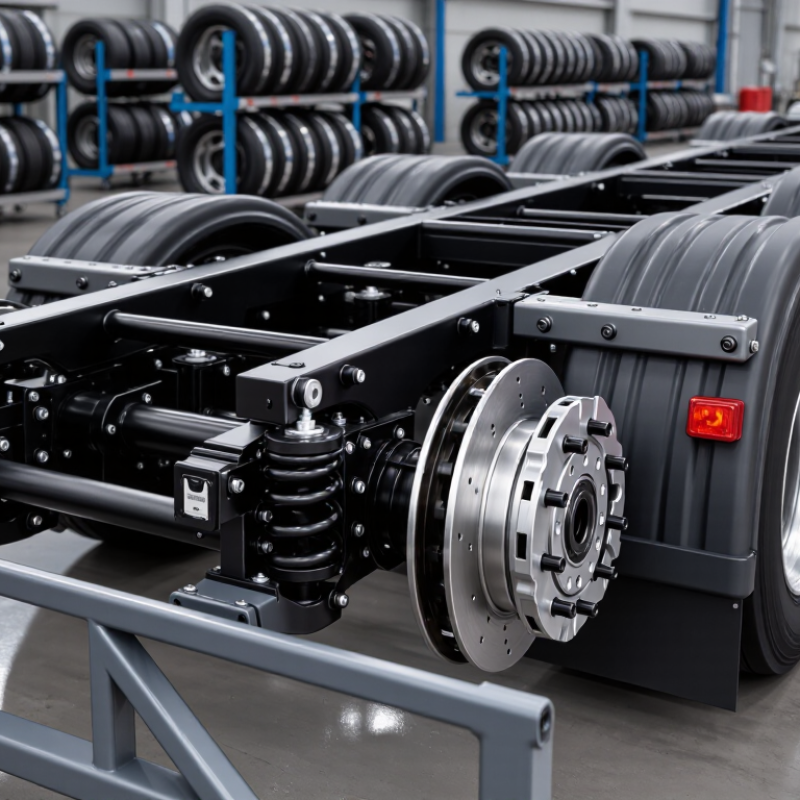
A commercial trailer axle in 2026 is more than a beam connecting two wheels. It is a load-bearing system that transfers cargo weight, braking forces, and road shock. Its defining measures include gross axle weight rating, brake capacity, wheel-end durability, suspension compatibility, and service access. The U.S. Department of Transportation’s Freight Facts and Figures 2023 reports that trucks moved about 12.9 billion tons of freight in 2022. That scale makes axle reliability a commercial requirement, not a workshop preference.
The American Trucking Associations’ American Trucking Trends 2024 reports that trucking carried 72.7% of domestic freight tonnage in 2022. Therefore, a leading trailer axle should protect uptime under repeated loading, tight turns, uneven yards, and long highway exposure. Field technicians usually inspect hub temperature, seal condition, brake wear, fastener torque, and tire alignment before approving continued service. Weight still matters. Lower unsprung mass can improve efficiency, but excessive weight reduction may reduce impact tolerance. That trade-off deserves more attention.
In 2026, the strongest axle design also supports measurable maintenance. Sensors may help track temperature, vibration, and service intervals, although sensor data cannot replace a physical inspection. A perfect axle does not exist. The practical choice depends on payload, suspension geometry, climate, and repair capability. I would question any specification sheet that lists only capacity. Real performance appears beside a loading dock, with warm hubs, worn pavement, and a trailer that has worked harder than expected.
How Axle Types Differ by Load, Design, and Application
What Are the 2026 Top Commercial Trailer Axles?
How Axle Types Differ by Load, Design, and Application
Commercial trailer axles in 2026 are selected by load demands, road conditions, and service frequency. A straight beam axle suits many dry vans, flatbeds, and utility trailers. Its simple structure supports heavy loads and simplifies inspection. It also adds unsprung weight, which may reduce ride comfort on rough roads.
Drop axles lower trailer height and improve loading stability. They work well for equipment haulers and applications with a low center of gravity. Torsion axles use rubber elements inside the axle assembly. They offer quieter operation, independent wheel movement, and less routine lubrication. However, heat, age, and uneven loading can reduce their performance.
No axle is perfect.
Air-ride axle systems help protect fragile cargo by controlling suspension movement. They are useful for long-distance freight and trailers carrying sensitive machinery. Steerable axle designs can reduce tire scrub during tight turns, especially on longer combinations. Yet they require careful alignment and more detailed maintenance.
A practical choice begins with verified axle ratings, wheel-end capacity, brake compatibility, and actual payload records. Do not select an axle only because its rating looks impressive. Overbuilt components can increase weight, cost, and maintenance needs.
In service, small clues matter: uneven tire wear, hot hubs, loose fasteners, or a trailer that leans under load. These details deserve attention before failure becomes expensive.
Which Features Matter When Comparing Top Trailer Axles?
When comparing top commercial trailer axles for 2026, start with load rating, not appearance. A polished finish means little if the axle cannot handle repeated shocks, uneven yards, and emergency braking. I look for a rating that leaves practical capacity above the trailer’s normal working load. That margin matters. Still, greater capacity can add weight and reduce efficiency. The best choice depends on actual routes, cargo, and loading habits.
Axle compatibility with the suspension is equally important. Check ride height, track width, spring seats, and mounting dimensions before ordering. Brake performance deserves close attention. Air or electric systems must match the trailer controls, duty cycle, and service environment. I also examine drum or disc design, heat management, and access to replacement parts. A powerful brake is not automatically a durable brake.
Corrosion protection, bearing quality, seals, and wheel-end serviceability often separate dependable axles from troublesome ones. In wet ports or winter roads, sealed components and effective coatings can reduce downtime. Ask for test data, documented tolerances, and clear inspection intervals. Those details support reliable purchasing decisions. One caution remains: published ratings do not predict every field failure. Installation errors, poor torque control, and neglected inspections can defeat excellent hardware. I would compare service records and technician feedback, not only catalog figures. That evidence is sometimes incomplete. It should still influence the final selection.
How to Match an Axle to a Commercial Trailer
Choosing a commercial trailer axle starts with the load, not the axle catalog. Check the trailer’s gross vehicle weight rating, expected payload, and the weight carried by each axle group. The Federal Highway Administration’s Federal Bridge Formula shows why spacing matters: allowable gross weight changes with axle count and distance. A tandem axle placed too closely may carry less than expected.
In the field, I measure the load position before selecting capacity. A pallet placed near the rear can increase axle load quickly, even when total trailer weight looks acceptable. Select an axle rating above the calculated working load, but avoid excessive capacity that adds unnecessary weight. Confirm spring, hub, brake, tire, and wheel ratings as one system. The certification label remains the practical reference.
Maintenance data supports this careful approach. The American Transportation Research Institute reported average trucking maintenance costs of about 19.97 cents per mile in its 2023 operational-cost study, based on 2022 figures. Poor alignment, overloaded bearings, and uneven tire wear can push that figure higher. I have also seen seemingly correct specifications fail because real loading differed from the original estimate. Recheck the axle after several operating cycles, especially when routes include rough yards, steep grades, or frequent loading changes. The first calculation is useful, but it is not always right.
What Maintenance Factors Affect Axle Performance and Service Life?
What Are the 2026 Top Commercial Trailer Axles?
Axle performance depends heavily on maintenance, not only on load ratings or construction. In fleet inspections, uneven tire wear often reveals alignment problems before drivers notice handling changes. Measure alignment after curb impacts, suspension repairs, or repeated overload exposure. Even a small angle error can increase heat and rolling resistance.
Keep wheel-end components clean and properly adjusted. Inspect seals for grease leakage, damaged surfaces, or traces of water intrusion. A dry hub can overheat quickly. It happens quietly. Check bearings according to the axle maker’s service schedule, using the correct lubricant and tightening procedure. Excessive preload is also dangerous because it creates friction and heat. Record torque readings instead of relying on feel.
Brake condition directly affects axle life. Inspect drums, rotors, pads, and automatic adjusters for uneven contact. Excessive brake heat can damage seals and weaken lubricant. Corrosion deserves attention in coastal regions and during winter road treatment. Wash vulnerable areas, but avoid forcing water past seals with high-pressure equipment. Small neglect becomes expensive.
Load distribution matters as well. A trailer carrying more weight on one side can stress springs, hubs, and tires unevenly. I have seen maintenance checks focus on visible damage while ignoring tire pressure differences. That is an easy mistake. Pressure should be checked cold, with calibrated equipment, and compared with the approved operating specification. Keep inspection records, including mileage, temperature concerns, repaired leaks, and unusual noises. These details help technicians identify gradual axle wear before a roadside failure occurs.
What Are the 2026 Top Commercial Trailer Axles?
Common commercial trailer axle capacity classes and the maintenance factors that influence performance and service life.
Common axle capacity classes range from approximately 5,200 lb to 20,000 lb GAWR per axle. Actual suitability depends on trailer weight, payload, suspension design, braking requirements, and legal axle limits. Regular lubrication, wheel-end inspection, correct alignment, proper tire inflation, torque checks, corrosion control, and timely replacement of worn bearings or seals help protect axle performance and extend service life.
Conclusion
This guide explains what defines top Commercial Trailer Axles in 2026, focusing on the engineering factors that support safe, reliable, and efficient trailer operation. It explores how axle types differ according to load capacity, structural design, suspension configuration, braking systems, and intended application. From regional delivery trailers to heavy-duty transport equipment, selecting the right axle requires careful attention to gross weight, payload distribution, road conditions, clearance, and operating frequency.
The article also examines the features that matter most when comparing trailer axles, including durability, corrosion resistance, serviceability, compatibility, and performance under demanding conditions. Matching an axle to a commercial trailer involves evaluating the trailer’s frame, wheel configuration, suspension, and expected working environment. Finally, it highlights maintenance factors that influence service life, such as regular inspections, lubrication, alignment checks, fastener inspections, brake servicing, and timely replacement of worn components. Proper selection and consistent maintenance can help improve stability, reduce downtime, and support dependable long-term performance.