Choosing the right Trailer Wheel Rims is a safety, durability, and operating-cost decision. The rim is not merely a circular steel or aluminum component. It carries loads, manages heat, and supports the tire bead through uneven roads, tight turns, and repeated braking.
Recent industry research supports this practical view. Mordor Intelligence’s 2024 Global Trailer Market report identifies freight expansion, fleet renewal, and regional logistics growth as major market drivers. MarketsandMarkets’ Automotive Wheel Market analysis also highlights lightweight materials, corrosion resistance, and fuel-efficiency pressure. These trends matter to global buyers. A rim that saves weight may improve payload capacity, but poor fitment can create vibration, bead damage, or premature wear.
Small details matter.
Kevin Rohlwing, Chief Technical Officer at the Tire Industry Association, has stated, “The tire is the only thing connecting the vehicle to the road.” His point applies directly to Trailer Wheel Rims. The tire depends on the rim’s diameter, width, bolt pattern, offset, load rating, and surface condition. Buyers should verify these specifications against the trailer manufacturer’s documentation, the Tire and Rim Association Year Book, and applicable regional standards.
Steel rims often offer impact resistance and lower purchase cost. Aluminum rims can reduce weight and resist corrosion, but they usually require stricter torque control. This comparison is not absolute. Road salt, axle design, payload distribution, and maintenance quality can change the result.
This guide compares leading Trailer Wheel Rims for international buyers. It considers material, load capacity, finish, certification evidence, availability, warranty support, and total ownership cost. No product is perfect. The best choice depends on the trailer, route, climate, and service discipline.
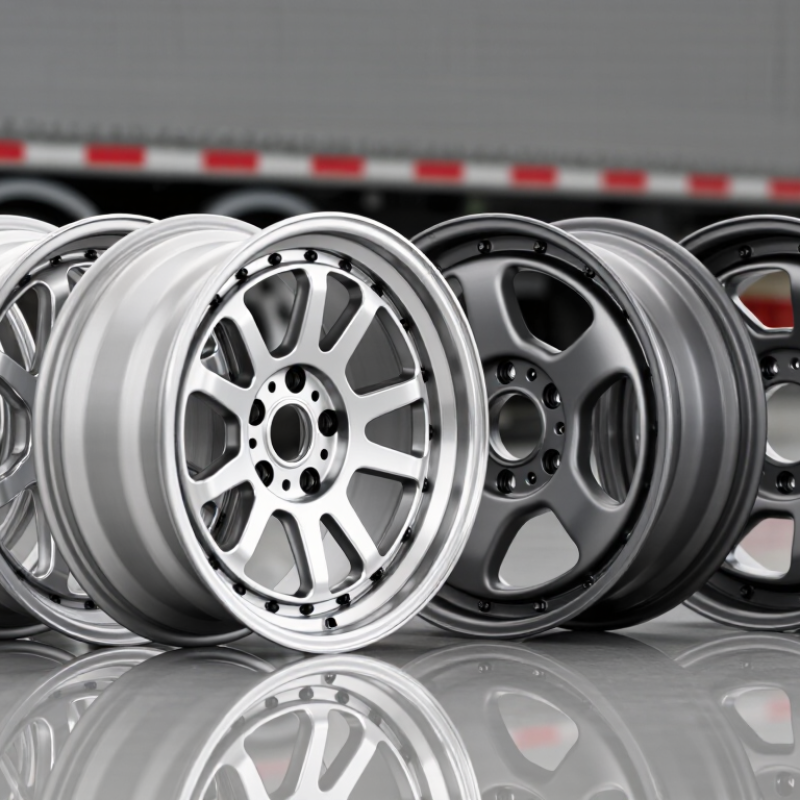
Top Trailer Wheel Rims for Global Buyers?
Choosing a trailer wheel rim starts with fit, not appearance. Rim size includes diameter and width, such as 15 by 6 inches. Both measurements must match the tire and trailer clearance. A wider rim may touch suspension parts during turns. Check the rim’s load rating against the trailer’s maximum axle load. In practical inspections, this detail prevents expensive fitting mistakes.
Bolt patterns describe the number of studs and the circle diameter between them. Common examples include five or six bolts, but regional measurement methods can differ. Measure from the correct stud centers, not the outer rim of a hole. A small error matters. The offset shows how far the mounting face sits from the rim centerline. Positive offset moves the rim inward, while negative offset moves it outward. Either choice can change tire clearance and bearing loads.
The hub bore must fit over the trailer hub without forcing the rim into place. A bore that is too small will not mount. One that is much larger may need a properly rated centering solution. Never rely only on a product photograph or a familiar code. Confirm the bolt pattern, offset, bore, rim width, load rating, and stud hardware with technical drawings. I once treated a matching diameter as enough; it was not. Supplier data can also contain mistakes, so recheck measurements before ordering across borders. Conditions vary. Pay attention to road temperature, corrosion exposure, and local service availability.
| Common Rim Size | Typical Rim Width | Common Bolt Pattern | Approx. PCD | Typical Offset Range | Common Hub Bore Range | Typical Trailer Use | Selection Considerations |
|---|---|---|---|---|---|---|---|
| 13 × 4.5 in | 4.5 in | 4-lug or 5-lug | 4 × 100 mm 5 × 114.3 mm |
+0 to +25 mm | 54.1–72.6 mm | Compact utility trailers, small boat trailers, and light cargo trailers | Confirm tire load range and ensure the rim clears the brake drum or hub assembly. |
| 14 × 5.5 in | 5.5 in | 5-lug | 5 × 114.3 mm 5 × 127 mm |
0 to +25 mm | 66.1–73.1 mm | Light-duty cargo, landscaping, and recreational trailers | A higher positive offset moves the wheel inward; check suspension and frame clearance. |
| 15 × 5 in | 5 in | 5-lug | 5 × 114.3 mm 5 × 127 mm |
0 to +25 mm | 66.1–73.1 mm | Boat trailers, utility trailers, and general-purpose cargo trailers | One of the common trailer sizes; verify the exact stud diameter and thread specification. |
| 15 × 6 in | 6 in | 5-lug or 6-lug | 5 × 114.3 mm 5 × 127 mm 6 × 139.7 mm |
−6 to +25 mm | 66.1–108.0 mm | Medium-duty utility, equipment, and enclosed trailers | Wider rims may support a broader tire range but can increase sidewall and fender clearance requirements. |
| 16 × 6 in | 6 in | 5-lug, 6-lug, or 8-lug | 5 × 127 mm 6 × 139.7 mm 8 × 165.1 mm |
0 to +25 mm | 71.5–121.3 mm | Heavy utility, horse, equipment, and enclosed trailers | Check the combined wheel-and-tire load rating against the trailer axle and gross axle weight rating. |
| 16 × 6.5 in | 6.5 in | 5-lug, 6-lug, or 8-lug | 5 × 127 mm 6 × 139.7 mm 8 × 165.1 mm |
0 to +25 mm | 71.5–121.3 mm | Medium- and heavy-duty cargo, equipment, and specialty trailers | Use only when the tire manufacturer permits the selected rim width and the trailer has sufficient clearance. |
| 17.5 × 6.75 in | 6.75 in | 5-lug, 6-lug, or 8-lug | 5 × 127 mm 6 × 139.7 mm 8 × 165.1 mm |
0 to +30 mm | 71.5–121.3 mm | Commercial and high-capacity trailer applications | Usually paired with higher-load commercial tires; confirm brake, hub, and axle compatibility before purchase. |
| 8 × 6.5 in | 6.5–7 in | 8-lug | 8 × 165.1 mm | −6 to +25 mm | 121.3 mm or application-specific | Heavy-duty equipment, commercial cargo, and large enclosed trailers | Measure the hub bore and backspacing carefully; clearance to calipers, springs, and fenders is essential. |
Match the rim diameter and width with the tire and available trailer clearance. A wider rim may touch suspension parts during turns. Fit comes first.
Count the studs and measure the correct circle between their centers. Do not measure from the outer edge of a hole. A small error can prevent mounting.
Positive offset moves the rim inward, while negative offset moves it outward. This affects tire clearance, brake space, suspension contact, and bearing loads. Measure carefully.
The bore must slide over the trailer hub without force. A smaller bore will not mount. A much larger bore may need a properly rated centering solution.
The rim rating should meet or exceed the specified load for each wheel. For a 3,500-pound axle, the nominal share is 1,750 pounds per wheel. Uneven cargo and road impacts can increase actual forces.
No. Durability testing provides useful evidence, but it cannot recreate every pothole or corrosion condition. Check the rim against the axle plate, tire load index, and cargo distribution. A certificate can reassure me too much.
Confirm the diameter, width, bolt pattern, offset, hub bore, load rating, and stud hardware. Use technical drawings instead of relying on photographs or familiar codes. Supplier data can contain mistakes. Recheck measurements.
Inspect cracks, flange distortion, loose fasteners, and contact marks near brakes or suspension. Pay attention to corrosion, road temperature, and local service access. Look closely.
Choosing the right Trailer Wheel Rims requires more than comparing appearance and price. Buyers should first confirm the correct rim diameter, width, bolt pattern, offset (ET), and hub bore for their trailer and axle. Load capacity is equally important: each rim must safely support the trailer’s maximum operating load and be matched with appropriate tires. Reviewing performance against recognized trailer wheel testing requirements, including SAE J1204 principles, can help buyers assess durability and safety.
Steel and aluminum rims offer different advantages. Steel usually provides strong impact resistance and lower cost, while aluminum can reduce weight and improve corrosion resistance when properly finished. For international purchases, buyers should also check applicable documentation and manufacturing quality systems, such as DOT-related requirements, ECE R124 applicability, and ISO 9001 quality management certification. A practical comparison of 13-, 14-, 15-, and 16-inch options should include load ratings, ET values, corrosion protection, hub compatibility, warranty terms, and test records to ensure reliable long-term performance.