Navigating the Structural Dynamics of Material Handling Forklift Rims
In modern industrial logistics, warehouse automation, and heavy material handling, the wheel rim is rarely a mere mounting component. It represents a safety-critical structural nexus that endures immense static loads, severe dynamic torsional forces, and harsh operating environments. When an industrial forklift executes a tight 90-degree pivot while carrying a multi-ton payload elevated 8 meters in the air, the entire moment load translates directly through the wheel hub assembly into the material handling forklift rims.
For global procurement managers, OEM engineering teams, and aftermarket distributors, sourcing high-grade forklift rims requires balancing physical durability against procurement economics. Substandard wheel rims invite premature fatigue cracking, bolt-hole elongation, flange distortion, and catastrophic rim separation—events that directly cause costly warehouse downtime and severe safety hazards. This engineering guide synthesizes key technical insights, global procurement paradigms, and technological roadmaps to empower data-driven purchasing decisions.
Information Gain Key Takeaway for Procurement Officers
Wheel rim procurement must move beyond simple dimensional fitment. Dynamic radial fatigue life, high-yield structural steel composition (such as IS 2062 Grade E250/E350), and salt-spray-resistant cathodic electrocoating (ED) dictate total lifetime operation costs far more than initial purchase price discounts.
ARS Industries: A Decade of Precision Engineering in Shamli, India
Established in 2014 in Shamli, Uttar Pradesh (India), ARS Industries (formerly Asa Ram & Sons) has established itself as an ISO-compliant manufacturing powerhouse specializing in heavy-duty steel wheel rims, commercial trailer rims, ADV axles, and agricultural implements. Operating from a state-of-the-art facility equipped with precision stamping presses, automated rim-rolling lines, and submerged arc welding (SAW) systems, ARS Industries bridges the gap between high-precision OEM standards and competitive global export pricing.
Our Manufacturing Rigor & Metallurgical Integrity
At ARS Industries, every material handling forklift rim undergoes a multi-tier quality control protocol designed to satisfy stringent international standards including ETRTO (European Tyre and Rim Technical Organisation) and TRA (Tire and Rim Association):
- Raw Material Traceability: Sourcing prime structural steel coils with tested tensile strength (minimum 410–510 MPa) and high yield points.
- Precision Roll Forming & Stamping: CNC-controlled rim rolling machines achieve ultra-tight radial and lateral runout tolerances within ±0.8 mm.
- Advanced Weld Seam Inspection: Ultrasonic and non-destructive magnetic particle testing ensure zero voiding along the rim circumferential weld.
- Dynamic Dynamic Load Fatigue Testing: In-house cornering fatigue testing simulates over 500,000 stress cycles under 150% rated payload.
With an established export network spanning India, Nepal, Sri Lanka, and expanding into Middle Eastern and African markets, ARS Industries serves both high-volume OEM assembly lines and regional aftermarket distributors seeking dependable, custom-engineered wheel solutions.
Core Product Portfolio: Material Handling Forklift Rims Recommended Lineup
Selecting the correct rim architecture depends directly on forklift capacity, tire type (pneumatic vs. solid resilient), vehicle velocity, and maintenance accessibility. ARS Industries manufactures a comprehensive range of material handling wheel assemblies tailored to specific operational profiles:
Standard Industrial Forklift Rims
Designed for Class I electric counterbalance and Class IV/V internal combustion forklifts ranging from 1.5 to 5.0 tonnes. Compatible with solid tires and pneumatic tire assemblies, delivering high lateral stiffness under maximum load heights.
Ideal For: General warehousing, logistics hubs, container terminals.
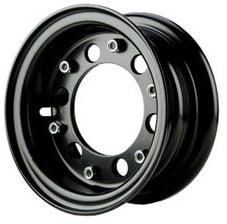
Two-Piece Split Wheel Rims
Engineered with two symmetrical half-shells bolted together through high-tensile Grade 8.8 or 10.9 fasteners. Split rims allow rapid tire replacement on small-to-medium forklifts without specialized hydraulic tire presses.
Ideal For: 1.0t – 3.5t light-duty forklifts, tow tractors, ground support machinery.
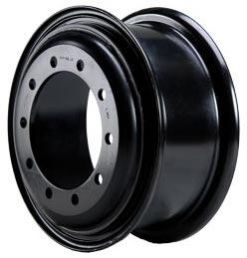
Multi-Piece Lock Ring Type Rims
Available in 3-piece (rim base, side ring, lock ring) and 4-piece (addition of advance band) configurations. Built for heavy-capacity forklifts (5t to 16t+) operating under extreme pneumatic pressure and severe impact loads.
Ideal For: Heavy manufacturing, steel yards, seaport container handlers.
Technical Specification Comparison Matrix
To assist OEM purchasing teams in preliminary component selection, the table below provides technical parameters across standard industrial rim classifications:
| Rim Design Architecture |
Forklift Tonnage Class |
Compatible Tire Type |
Steel Grade Standard |
Typical Bolt Hole Configuration |
Maintenance Complexity |
| 2-Piece Split Rim |
1.0T – 3.5T |
Pneumatic / Small Solid |
IS 2062 E250 / S235JR |
4 / 6 / 8 PCD Standard |
Low (No Hydraulic Press Needed) |
| 3-Piece Lock Ring Rim |
3.0T – 10.0T |
Pneumatic & Quick Solid |
IS 2062 E350 / S355JR |
6 / 8 / 10 PCD Reinforced |
Moderate (Lock Ring Tools Required) |
| 4-Piece Multi-Ring Rim |
8.0T – 25.0T+ |
Heavy Duty Pneumatic |
High-Yield HSLA Steel |
10 / 12 Heavy Hub Flange |
High (Certified Service Techs) |
| Flat-Base Heavy Rim |
Specialized AGV / Reach Truck |
Press-On Solid Band |
Precision Machined Forged Steel |
Custom OEM PCD Patterns |
Low (Press Assembly) |
Future Technology & Manufacturing Trends in Material Handling Rims
As industrial material handling shifts toward electrification, autonomous mobile robots (AMRs), and zero-emission green logistics, the engineering expectations placed on material handling forklift rims are undergoing a significant transformation. Global procurement strategists must align their component roadmaps with four major technological trends reshaping wheel rim manufacturing:
1. Electrification & Mass Reduction via High-Strength Low-Alloy (HSLA) Steels
Electric forklifts powered by Lithium-ion (Li-ion) batteries carry high static battery weights while striving to maximize operating runtimes per charge. Reducing unsprung mass at the wheel level directly lowers rotational inertia, extending battery duty cycles. By substituting traditional mild steel with micro-alloyed HSLA steel grades, ARS Industries achieves up to a 12% weight reduction without compromising yield strength or dynamic fatigue tolerance.
2. AGV & Autonomous Vehicle Precision Tolerances
Autonomous Guided Vehicles (AGVs) rely on high-precision wheel positioning encoders and automated floor sensors. Standard commercial rim runout variations can introduce micro-vibrations that distort sensor readings or cause uneven wear on robotic drive tracks. Future material handling rims require lathe-machined mounting faces and strict radial runout control down to ≤0.5 mm to ensure ultra-smooth autonomous operation.
3. Advanced Anti-Corrosion Cathodic Electrocoating (E-Coat)
Forklifts operating in cold storage, pharmaceutical cleanrooms, food processing plants, or coastal fertilizer facilities face harsh chemical and moisture exposure. Traditional spray painting peels under high torque stress, causing underlying steel oxidization. Modern rim manufacturing utilizes multi-stage zinc phosphate pretreatment followed by immersion Cathodic Electrocoat (ED) painting, delivering over 720 hours of salt-spray resistance (ASTM B117 compliant).
4. Smart Rim Integration & Predictive Maintenance Sensors
Industry 4.0 integration is entering heavy material handling components. Future OEM rim architectures are incorporating embedded TPMS (Tire Pressure Monitoring System) pockets and load-cell vibration transducers within the wheel web structure. These sensors transmit real-time thermal, pressure, and structural strain data to fleet management dashboards, preventing unexpected wheel failure before it occurs.
Global Procurement Trends: Strategic Sourcing & Risk Mitigation
Global supply chain disruptions over recent years have forced industrial purchasing managers to re-evaluate single-source dependencies and volatile freight routes. When procuring material handling forklift rims at scale, international buyers are focusing on three strategic pillars:
The Rise of India as a Global Rim Manufacturing Hub
India has emerged as an exceptionally competitive manufacturing center for forged and stamped steel components. Combining abundant domestic steel production (TATA, JSW, SAIL), skilled metallurgical engineering talent, and favorable export infrastructure, Indian manufacturers like ARS Industries provide global OEMs with a robust alternative to traditional East Asian sourcing.
Total Cost of Ownership (TCO) vs. Initial Unit Purchase Price
While initial piece price remains an important metric, savvy procurement directors calculate Total Cost of Ownership (TCO) when awarding multi-year supply contracts. A cheap forklift rim engineered with subpar welding or lower-grade steel can lead to frequent bolt hole cracking, leading to premature tire replacement and unscheduled machine downtime. Over a 5-year forklift operating life, high-integrity rims from ARS Industries lower lifecycle operational expenditure by up to 22%.
OEM Customization & Agile Small-to-Medium Batch Production
Global forklift markets require highly customized bolt patterns, backspacing dimensions, central bore chamfers, and specialized paint colors (e.g., Signal Yellow, Gloss Black, Safety Orange). High-volume automated factories often reject custom orders under 1,000 units. ARS Industries maintains flexible manufacturing tooling that efficiently accommodates specialized OEM runs starting from 100 to 500 units without exorbitant tooling surcharges.
Frequently Asked Questions (FAQ) — Material Handling Forklift Rims
Below are authoritative answers to critical technical and procurement questions frequently submitted by global buyers and industrial fleet engineers:
Q1: How do split rims differ from lock ring rims, and how do I choose the correct design for my forklift fleet?
Split Rims (2-Piece): Consist of two halves held together by assembly bolts around the center periphery. They are predominantly used on smaller forklifts (1.0t to 3.5t). They allow technicians to change pneumatic or solid tires in the field using basic wrenches without requiring a heavy hydraulic tire press.
Lock Ring Rims (3-Piece or 4-Piece): Feature a continuous rim body, a side ring, and a removable split locking ring. They are designed for medium-to-heavy capacity forklifts (3.5t up to 25t+). Lock ring designs handle much higher pneumatic inflation pressures and heavy dynamic forces. Choosing between them depends on your forklift capacity, tire style, and available maintenance facilities.
Q2: What steel grades and manufacturing standards are utilized in ARS Industries' forklift wheel rims?
ARS Industries utilizes certified structural steel plates and rim sections complying with IS 2062 (Grade E250 / E350), ASTM A36, and European EN 10025 (S235JR / S355JR) standards. All rim profiles follow dimensional guidelines established by ETRTO (European Tyre and Rim Technical Organisation) and TRA (Tire and Rim Association), ensuring 100% mounting interchangeability with global forklift brands including Toyota, Linde, Hyster, Yale, Crown, Komatsu, and Heli.
Q3: What causes bolt hole elongation and rim flange cracking in material handling equipment?
Bolt hole elongation typically results from improper lug nut torque application (over-torquing stretching the stud, or under-torquing allowing micro-movement under acceleration/braking). Rim flange cracking occurs due to severe side-load impacts against curbs or racking, operating under-inflated pneumatic tires, or exceeding the rated dynamic payload of the rim base. ARS Industries reinforces wheel disc thickness and uses precision countersunk bolt holes to evenly distribute clamping loads.
Q4: Can ARS Industries manufacture custom OEM wheel rims based on CAD drawings or sample samples?
Yes. Our in-house engineering team works directly with OEM technical specifications, 2D/3D CAD models (STEP, DWG, IGES), or physical samples. We can customize center hole diameter (PCD), bolt circle diameter, stud hole chamfer angles, offset/backspacing, rim width, and surface coating finishes according to your exact vehicle axle setup.
Q5: What are the typical export lead times, packaging standards, and minimum order quantities (MOQ)?
Standard production lead times for containerized export shipments range from 20 to 35 days from order confirmation. Rims are packed on ISPM-15 compliant heat-treated wooden pallets, shrink-wrapped with rust-inhibitive VCI film, and steel-strapped to prevent transit movement. Our standard MOQ starts at 100 units per rim size, but we accommodate mixed-product container orders for establishing new B2B partnerships.
Q6: Why are specialized wheel rim finishes required when running non-marking solid tires in cleanroom environments?
Non-marking solid tires (white or grey rubber compounds) are used in food, beverage, and pharmaceutical facilities to prevent dark skid marks. However, non-marking rubber lacks carbon black, which makes it less conductive for dissipating static electricity. Specialized smooth E-coated or anti-static coated rims prevent micro-fretting corrosion between the tire bead base and the rim wall, ensuring clean, spark-free operation.
Partner with India’s Premier Wheel Rim Manufacturer
Whether you are an industrial equipment OEM expanding your vehicle line, a global distributor seeking reliable aftermarket stock, or a fleet enterprise optimizing operational safety — ARS Industries delivers high-precision material handling forklift rims built to withstand the toughest industrial challenges.
Synergy Beyond Forklifts: Heavy Industrial & Agricultural Capability
In addition to material handling forklift rims, ARS Industries maintains specialized production lines for complementary heavy-duty equipment. Our comprehensive manufacturing ecosystem in Shamli includes:
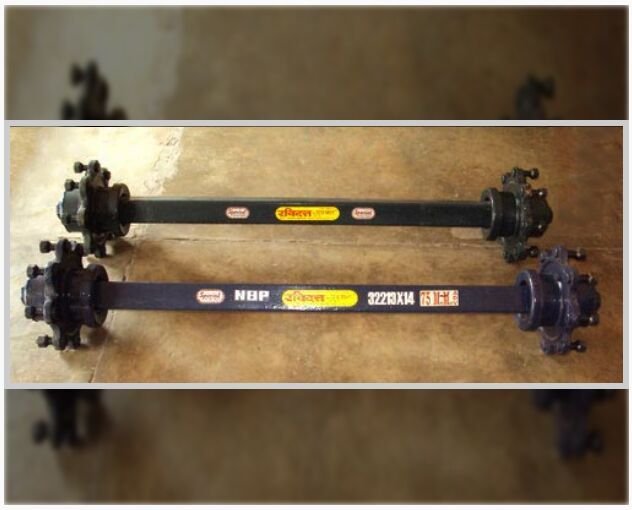
Heavy Duty Industrial Axles
Precision-machined solid steel axles engineered for heavy material transport trailers, factory carts, and specialized industrial haulers.
Commercial Trailer Rims
High-mileage commercial wheel rims built for demanding highway and off-road agricultural trailer operations across developing transport sectors.
By maintaining centralized quality control over raw steel sourcing, stamping, rolling, welding, and surface treatment across all product lines, ARS Industries guarantees uncompromised reliability and scalable delivery schedules for global B2B clients.